Lead Industrial Designer
Stockholm, Sweden
studioguide.se@gmail.com
— Artifacts
A collection of work, thoughts & experiments that didn't make it to front page. From quick contributions to longer explorations, a mix of dated, raw, or bold pieces. A quiet corner for more of my projects, sketches, and stray ideas that I think hold something worth sharing for those curious about the backstories behind the projects.
Husqvarna Construction
In house / Sweden
2019
Design Lead
Cowboy
Agency / Propeller - Sweden
2020
Role: Senior Designer
Pontus Edman - Designer
Viktor Berglin - Sr Design Engineer
Propeller Design AB
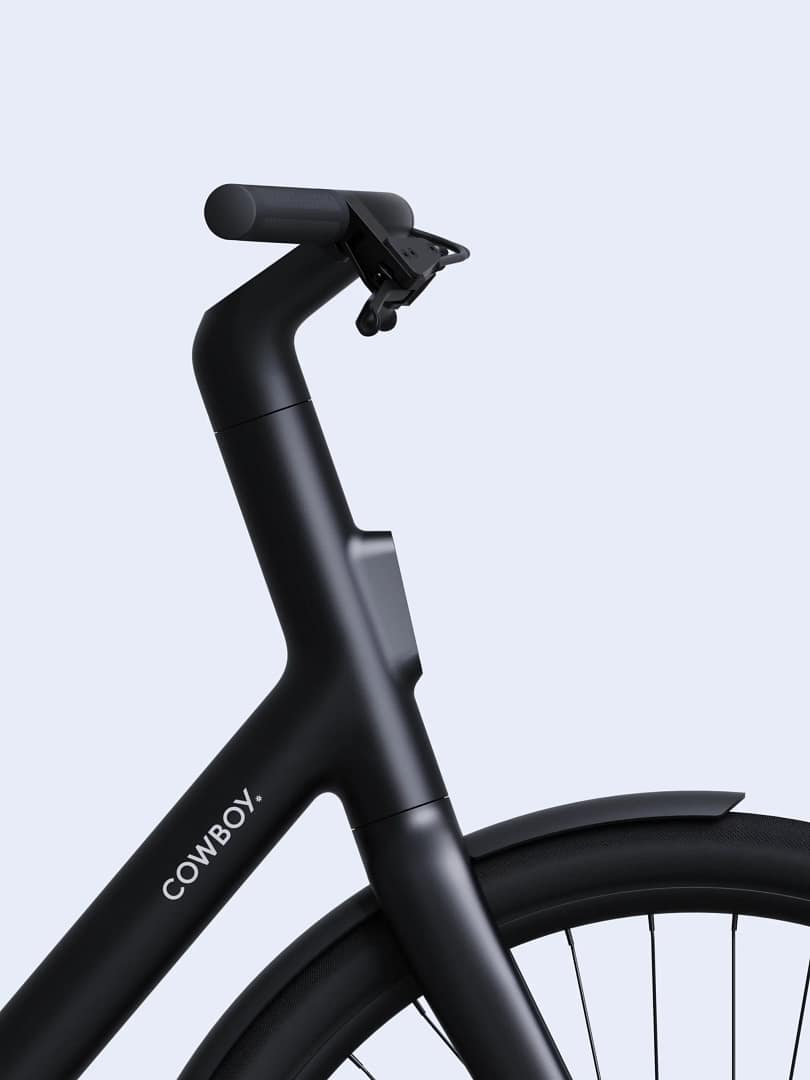
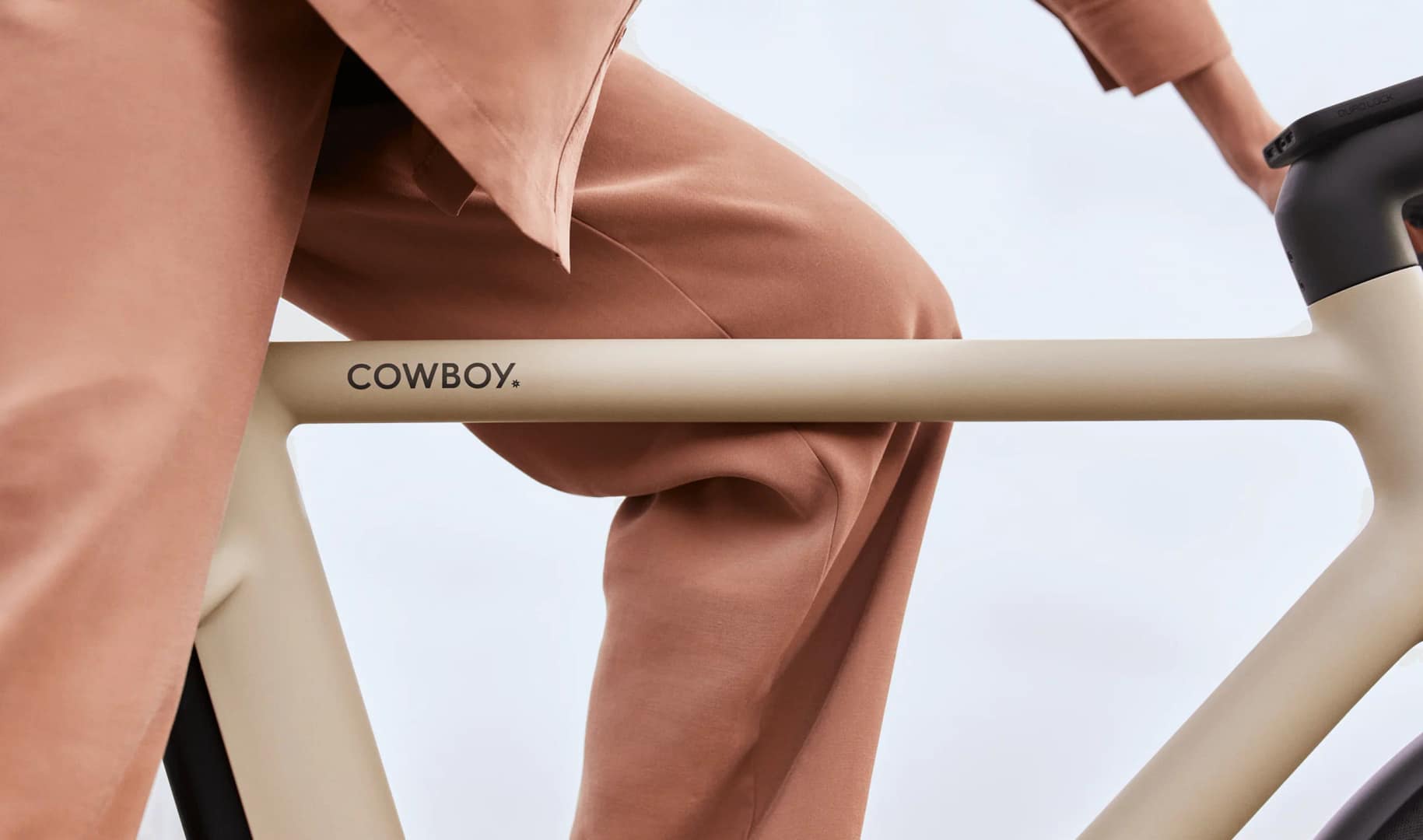
Propeller has designed the first cowboy bike back in 2017. During my time at Propeller in 2020, the swedish studio was continuing their effort with the next generation of the e-bike Belgian brand. Revamping the classic frame, building on the legacy and on the strong foundations, the V4 also introduced Comfort and Cruiser frame geometries and greatly enhanced the rider's digital experience. While the primary design focus was the overall frame revamp led by the core team, my role consisted of a rapid consultation and conceptual sketching phase to support design detailing across the new lineup.
Husqvarna Construction
In house / Sweden
2019
Design Lead
Designing the little sister —
Despite differing in technical requirements and ergonomics, we managed to bring the main design cues from its counterpart version, ensuring that both models feel like part of a cohesive family. The design language used across these models— baseline for future ones— has created a consistent visual and functional identity for Husqvarna's core drill range, communicating precision, reliability, and ease of use.
I sketched on the pedals, handles, motor unit, and accessories. But the most notable contribution was the exploration for the "connected cockpit" integrated in the steering bar. The V4 marked the introduction of a smartphone dock that merges the wireless charging pad and secure phone mount directly into the bike's stem while maintaining Cowboy's clean design language. This provided an ergonomic geometry with a raised cockpit and handlebars to optimize rider comfort and phone visibility.
Husqvarna Construction
In house / Sweden
2019
Design Lead
Husqvarna Drill – Handheld
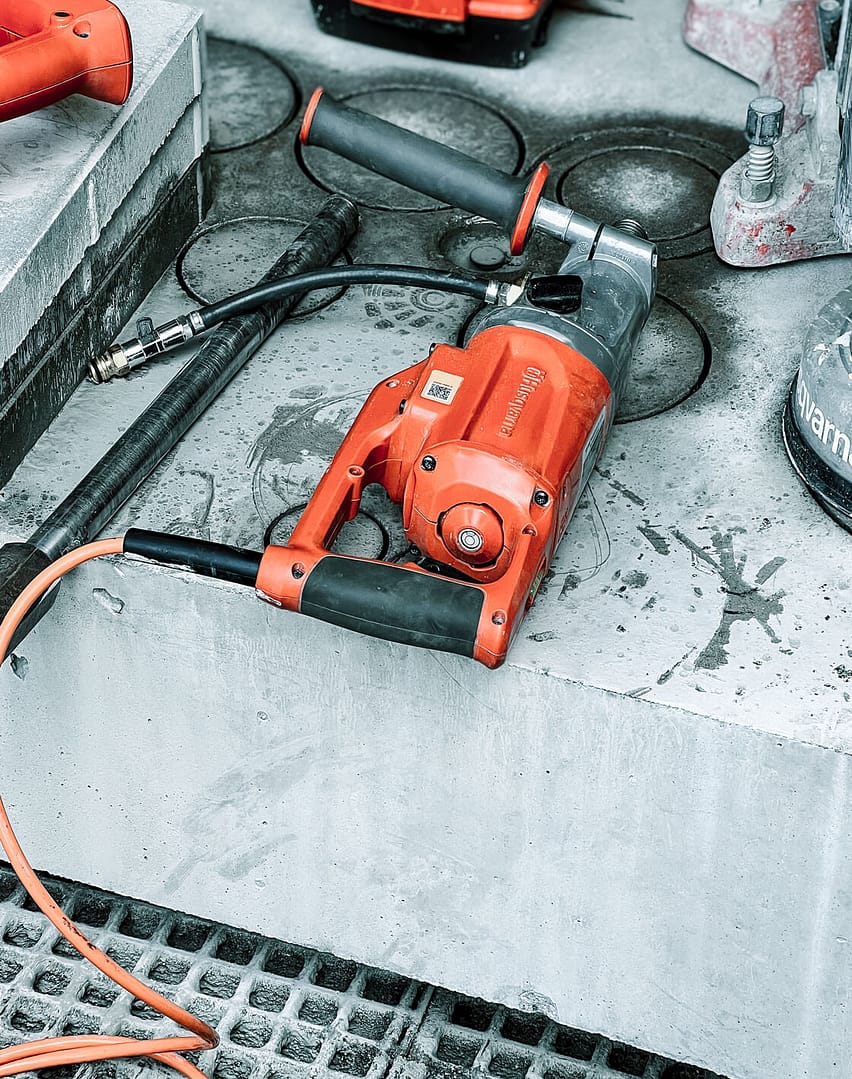
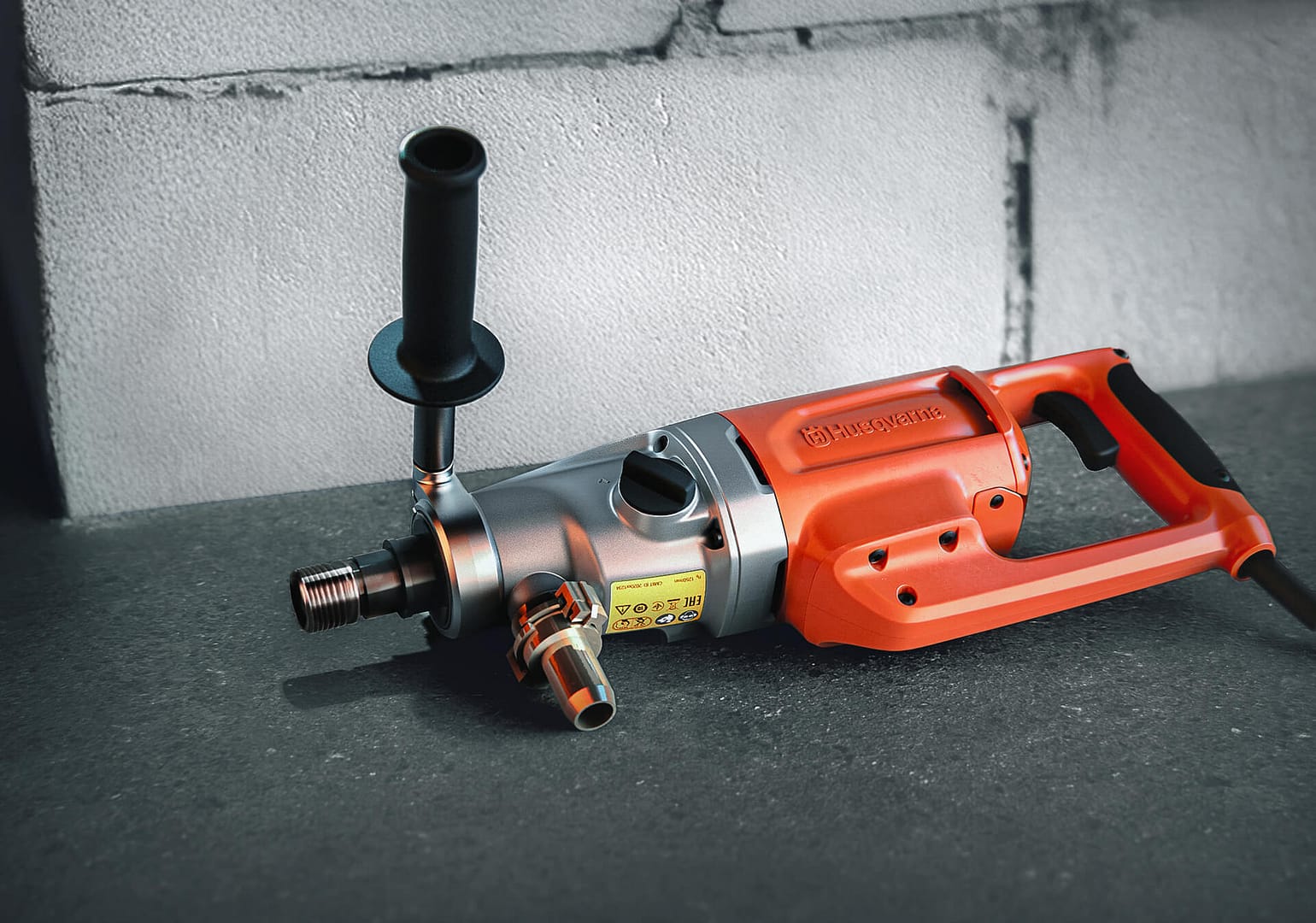
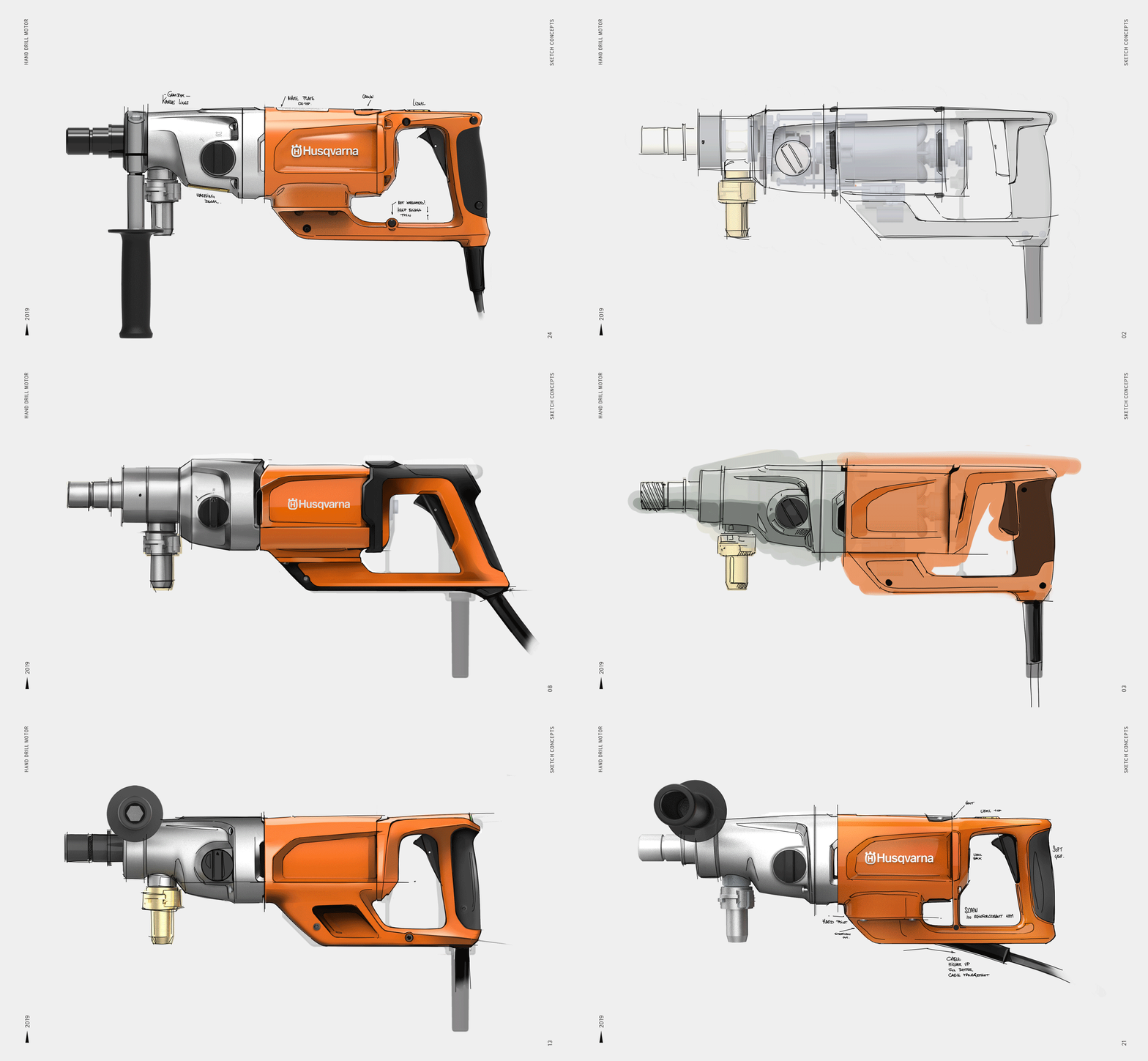
I was tasked with revamping a handheld drill for lighter applications like ventilation, plumbing, and electrical outlets, shortly after designing a larger stand-mounted version. We had to integrate a strict new engineering layout that enhances performance without compromising the robustness and unmatched reliability of the previous machine. As the design representant, I naturally carried over the design language of its larger counterpart while addressing all the engineering and manufacturability constraints from the technical package. My goal was to ensure the same level of ergonomic excellence, durability, and intuitiveness that users have come to expect from our products. Professionals have now praised its lightweight, ergonomic D-handle, which provides excellent control and minimizes fatigue—resulting in a tool that honors its trusted heritage while evolving to meet the demands of today’s industry.
Anders Erestam, Engineering Lead
Gustav Landberg, Brand Design Manager
Håkan Pizani, Global Product Manager
Husqvarna Construction
In house / Sweden
2019
Design Lead
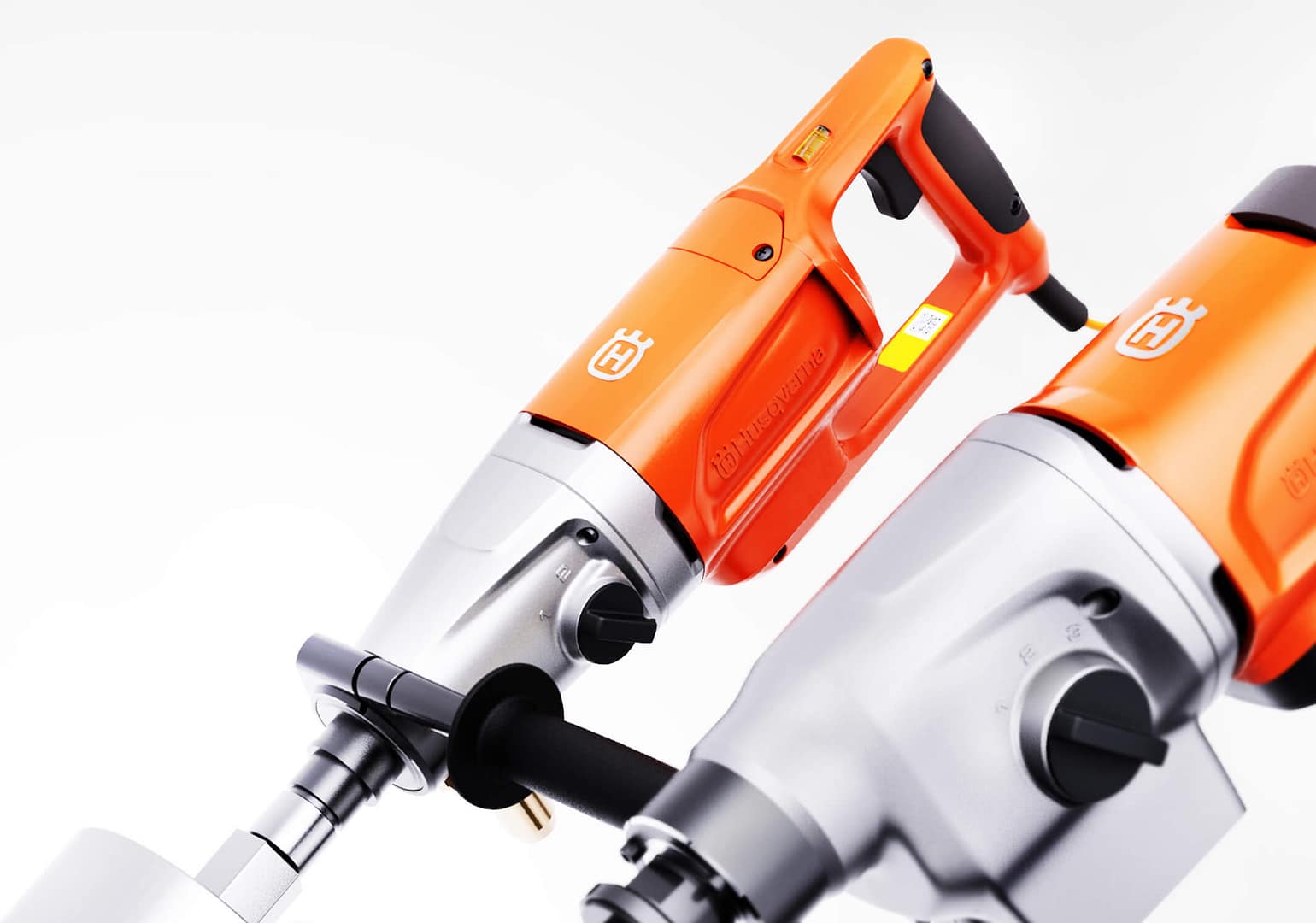
Designing the little sister —
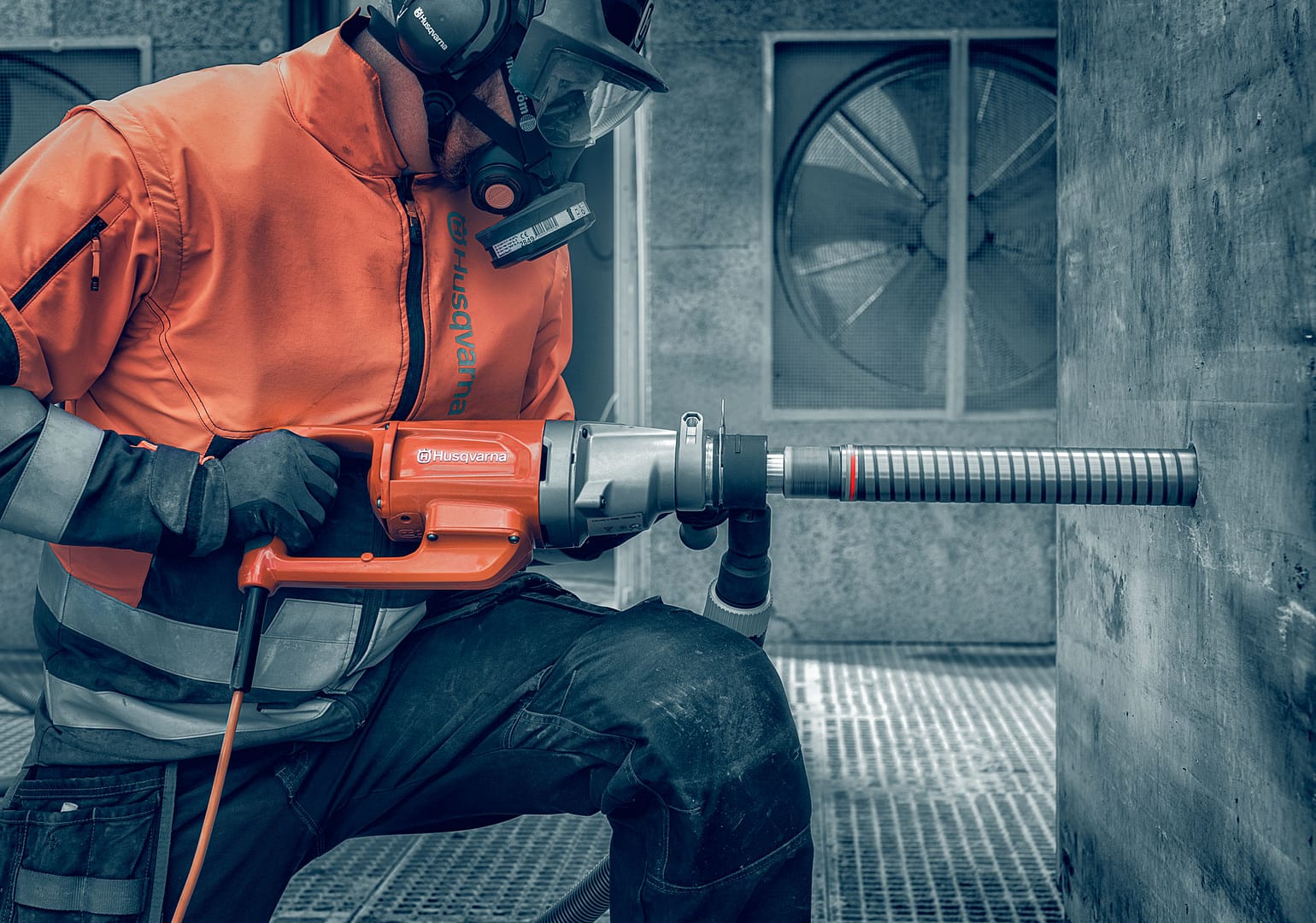
Despite differing in technical requirements and ergonomics, we managed to bring the main design cues from its counterpart version, ensuring that both models feel like part of a cohesive family. The design language used across these models— also the baseline for future ones— has created a consistent visual and functional identity for Husqvarna's drill range, communicating precision, reliability, and ease of use.
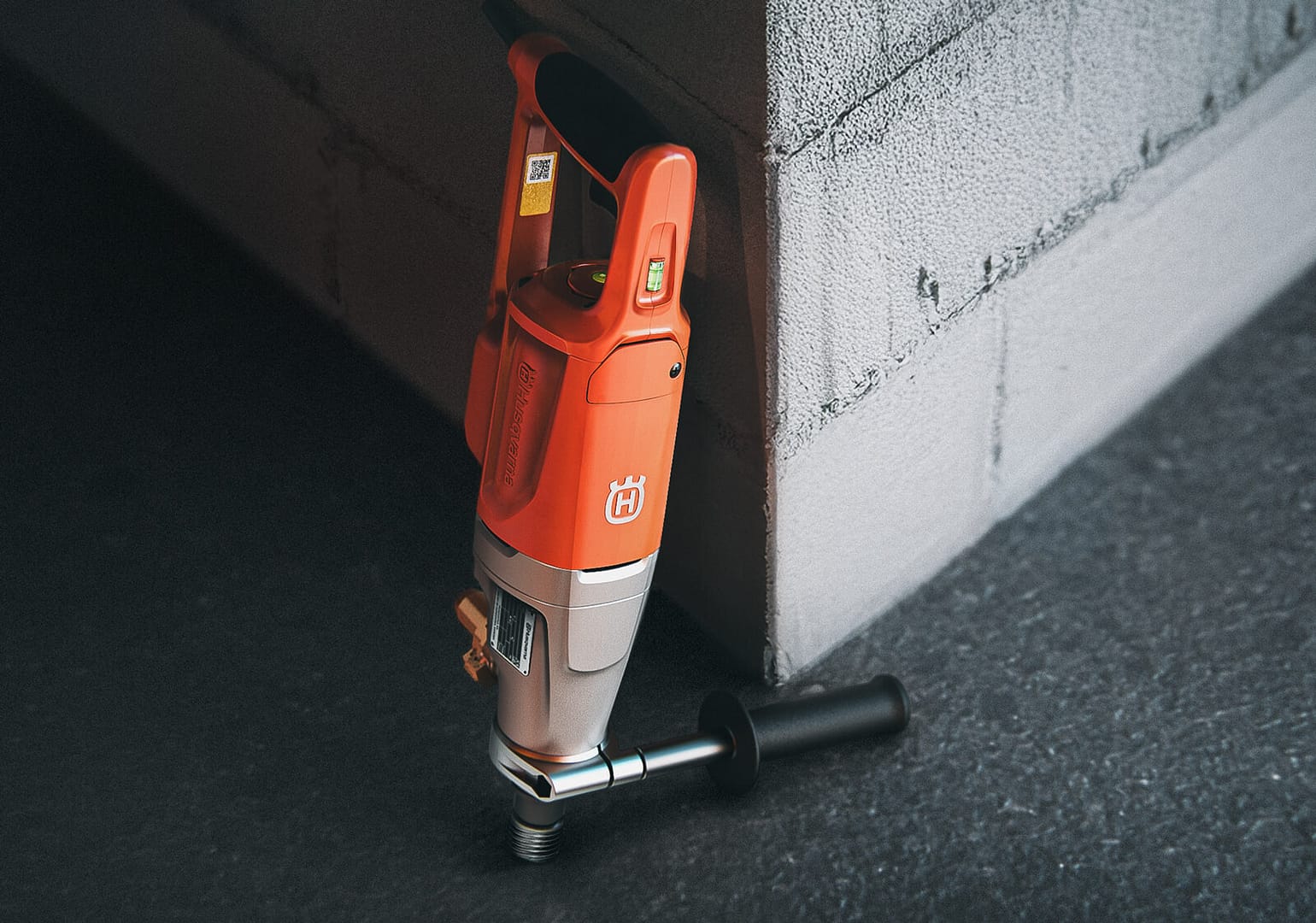
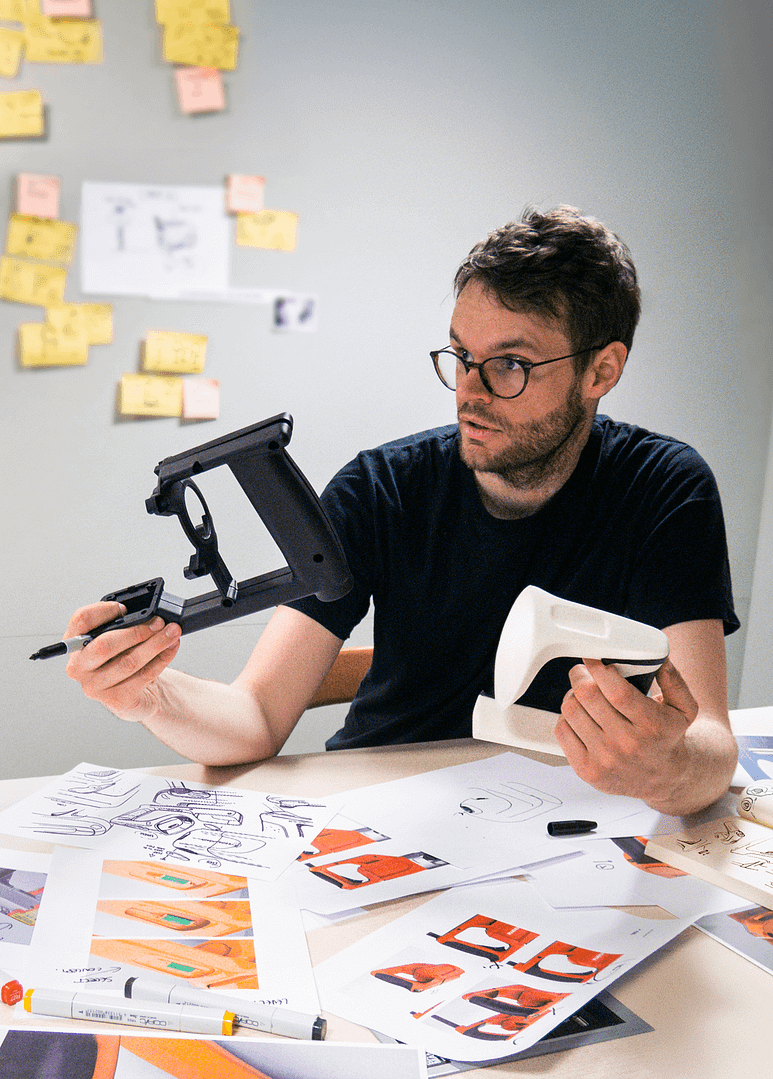
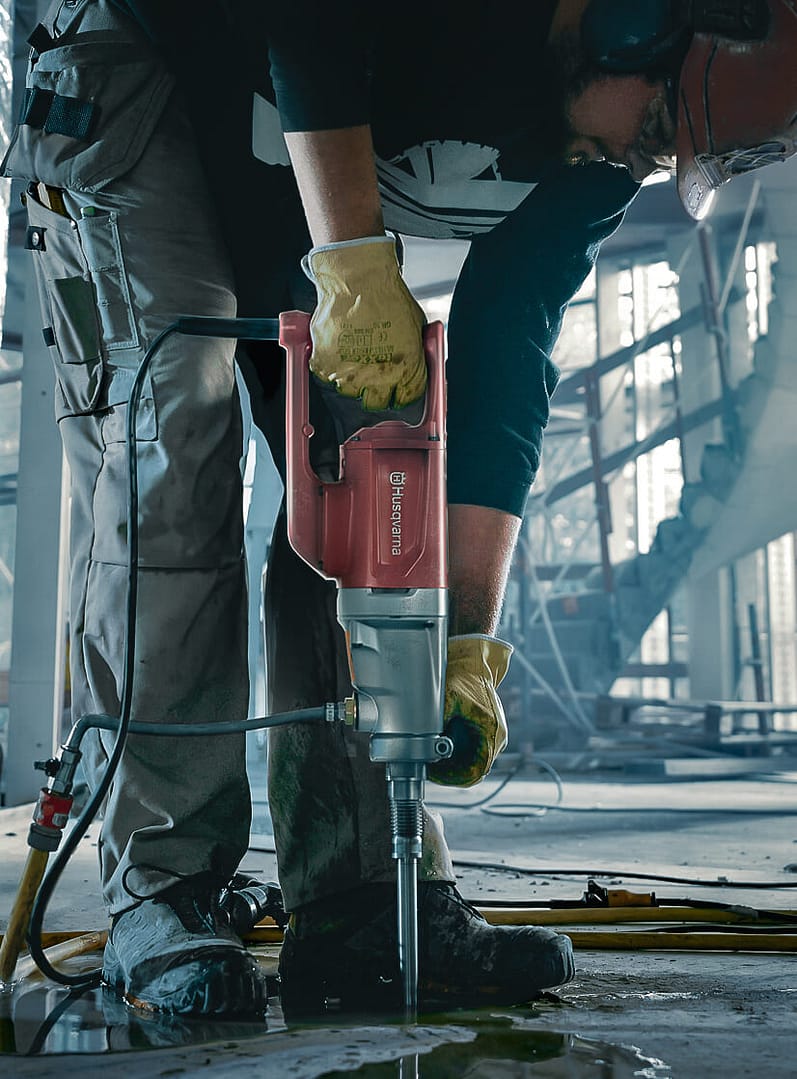
The design results from a thorough ergonomic study. This hand drill is heavy, constrained by a cable, and requires constant pressure to operate—making it hard to maneuver. I designed a large, comfortable handle to fit various hand sizes, offering a secure grip and reducing fatigue over extended use.


Client— frog
Status— Concept, Tested
2016
Frog VR Museum
Immersive Storytelling through VR.
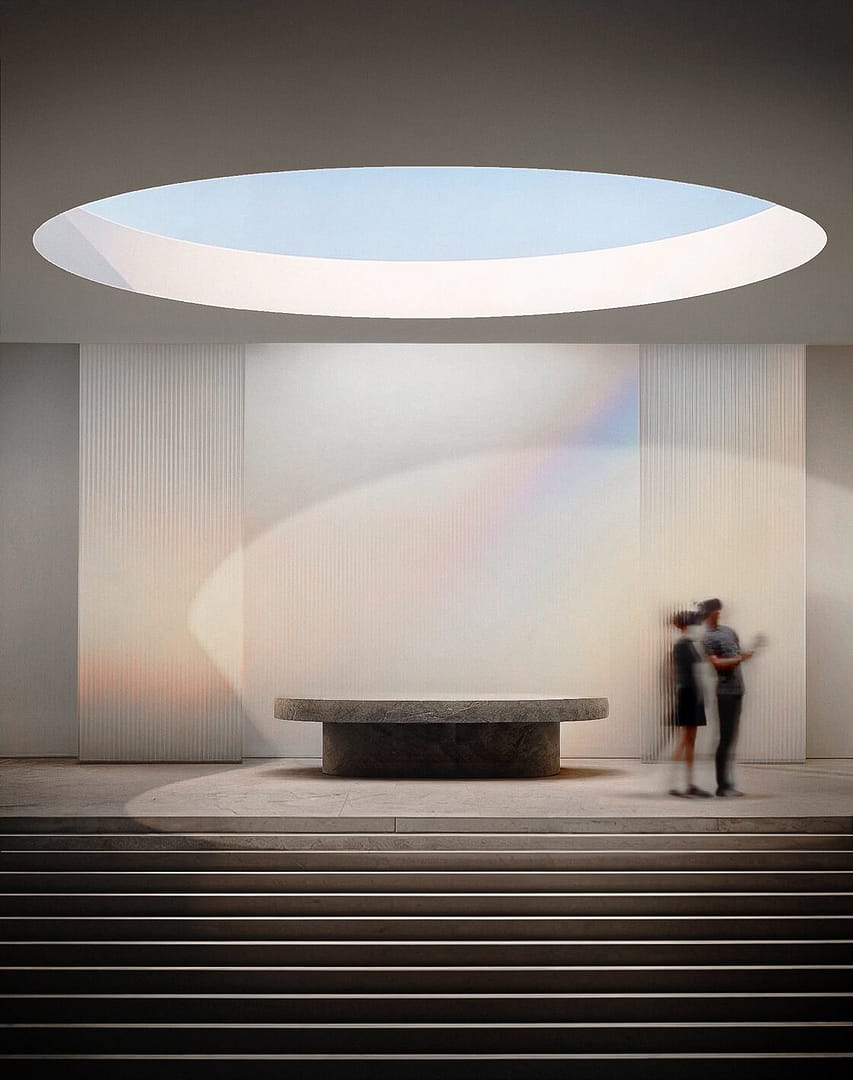
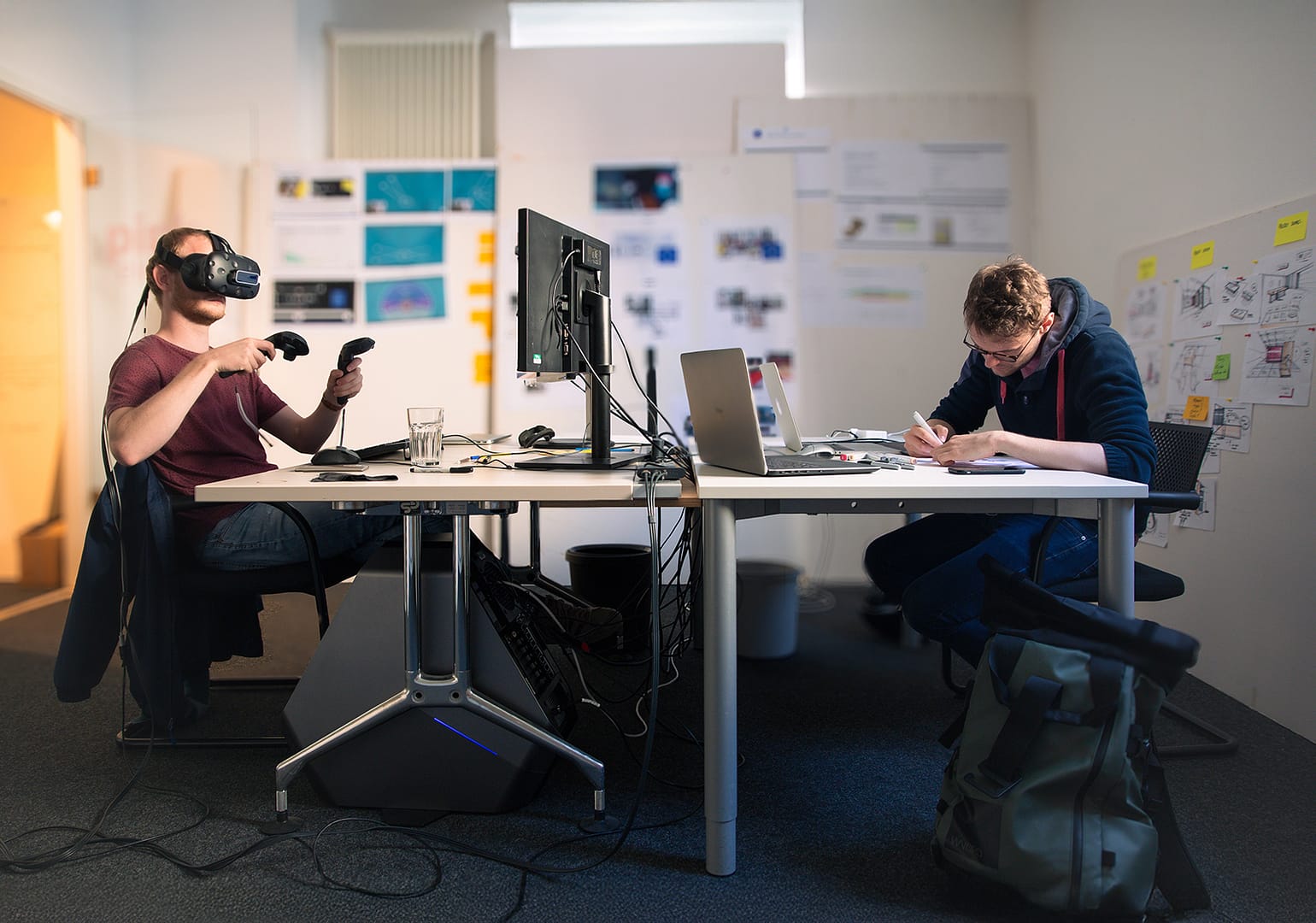
Together with my former colleague— Mathias Mouchard — we set out to explore VR technology as a way to unlock new business opportunities for frog.
Our goal was to create an immersive platform where we could showcase our latest projects—whether real products or prototypes that never made it to market—and push the boundaries of how we present our work.
The motivation behind this was that some of our products were sometimes too large, unique, or exclusive to be experienced by potential clients in their full blown context. By placing these designs in their natural environments and adding contextual storytelling, we could bring them to life—telling a complete story that allows clients to fully understand each product’s value and potential.
Team
Mathias Mouchard, Interaction Designer
Experience Design, Interaction Design
Agency / Germany
2017
Design Lead
Convincing in the virtual world —
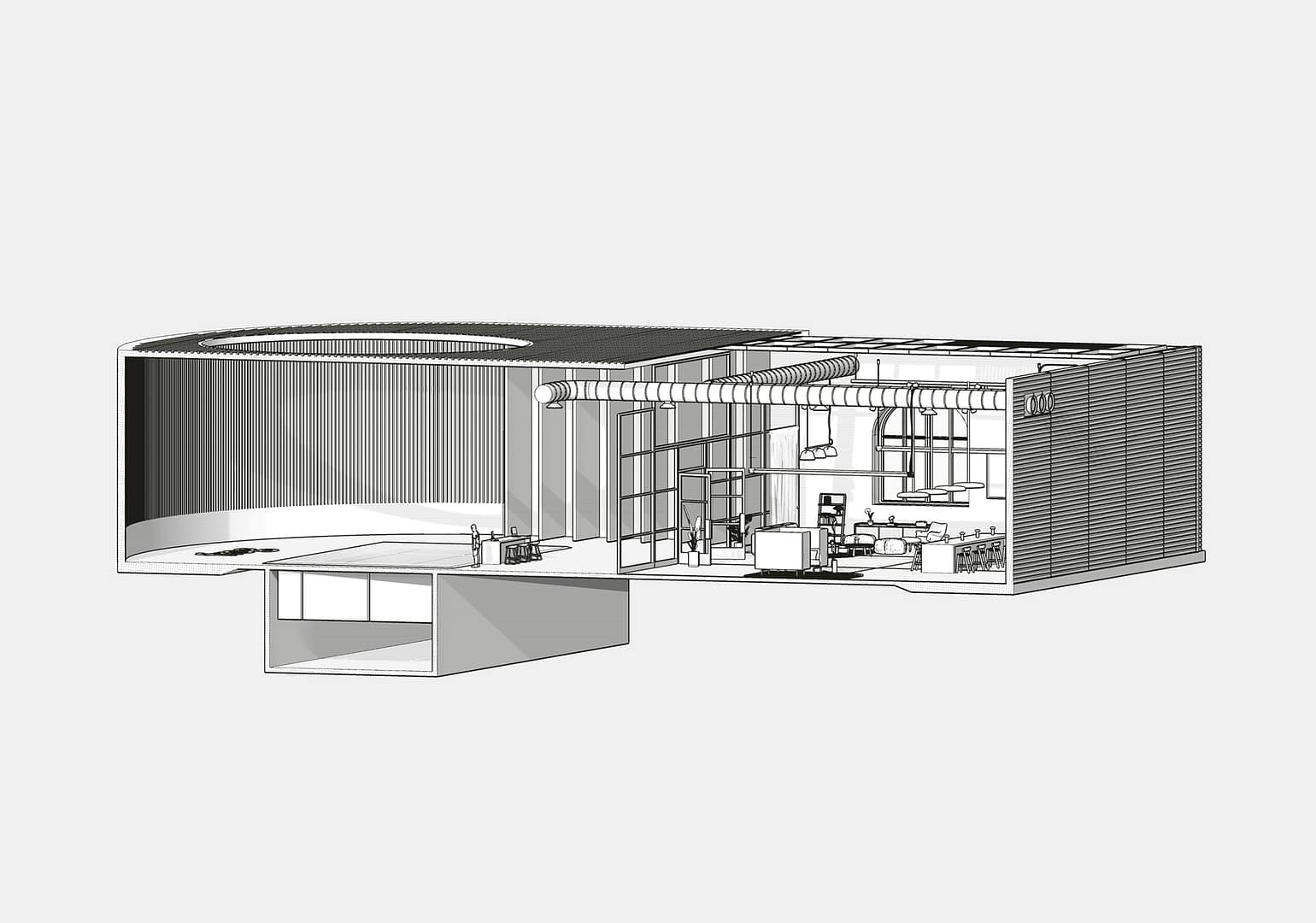
We wanted to transform the way we present our design. Browsing projects, access in-depth insights, and see products in their full context—whether in a factory, an operating room, or inside an airplane, The experience goes beyond static presentations, allowing users to move freely around products, interact with details, and explore every angle as if they were physically there.
A gateway to studio culture —
As the platform evolved, we wanted to offer more than just product showcases. We wanted to create a deeper connection between our work and the people behind it—a full representation of frog’s culture. To achieve this, we dedicated half of the space to showcasing our studios worldwide. Imagine bringing clients into these virtual spaces, where they can not only explore our work but also immerse themselves in the culture of our global studios. They can engage with teams, discuss future projects, and even sign contracts—all within a digital world crafted by the local teams themselves.
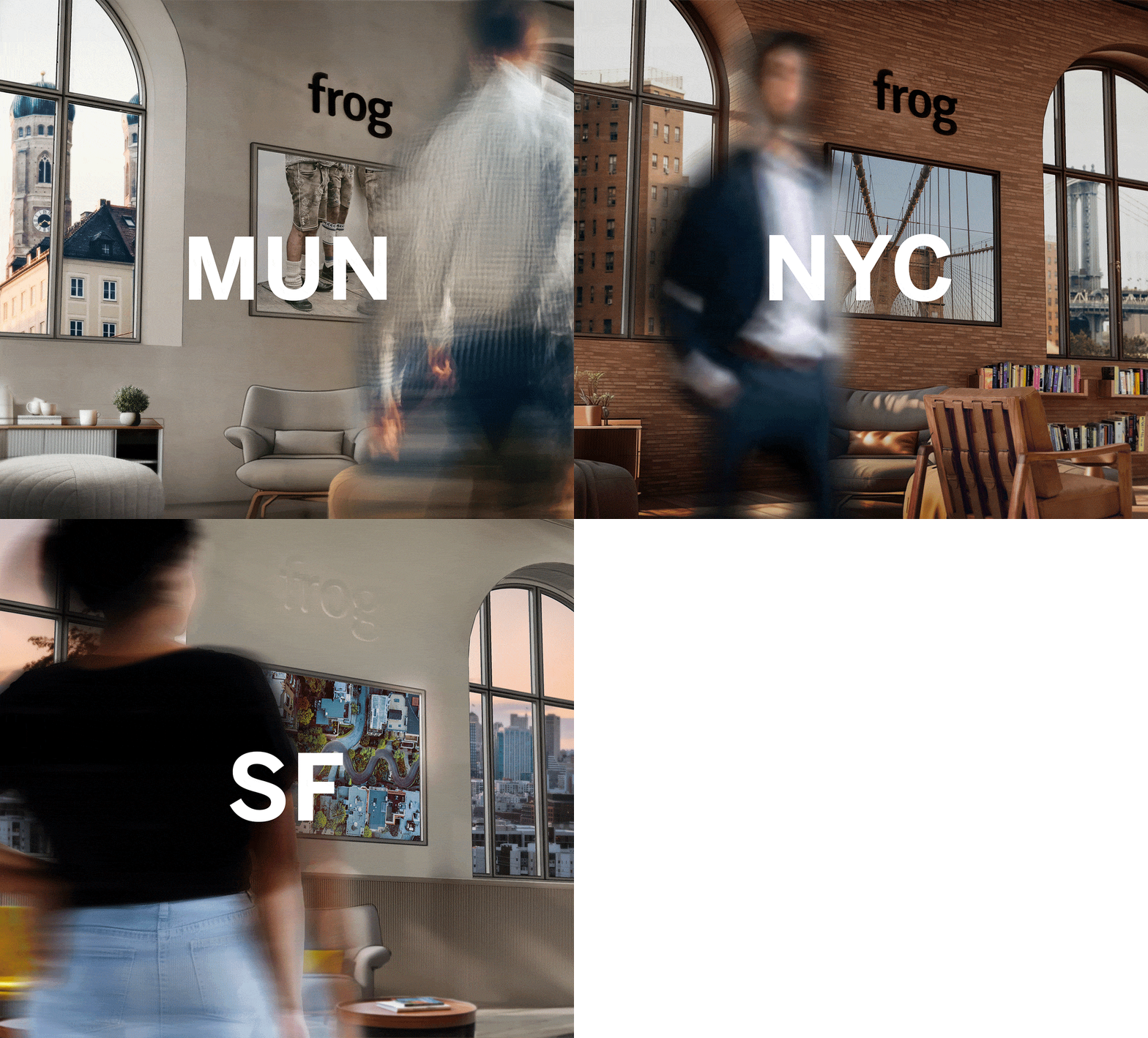
Each studio could create its own custom-built environment, featuring portraits, bios, props, and mini-experiences that reflect its unique mindset. More than just a product showcase, it is an immersive representation of frog’s culture, diversity and innovation.


Concept exploration —
VR lens to seamlessly place products in their real-world context, enhancing storytelling.
Self Initiated Project— frog
Status— Concept
2016
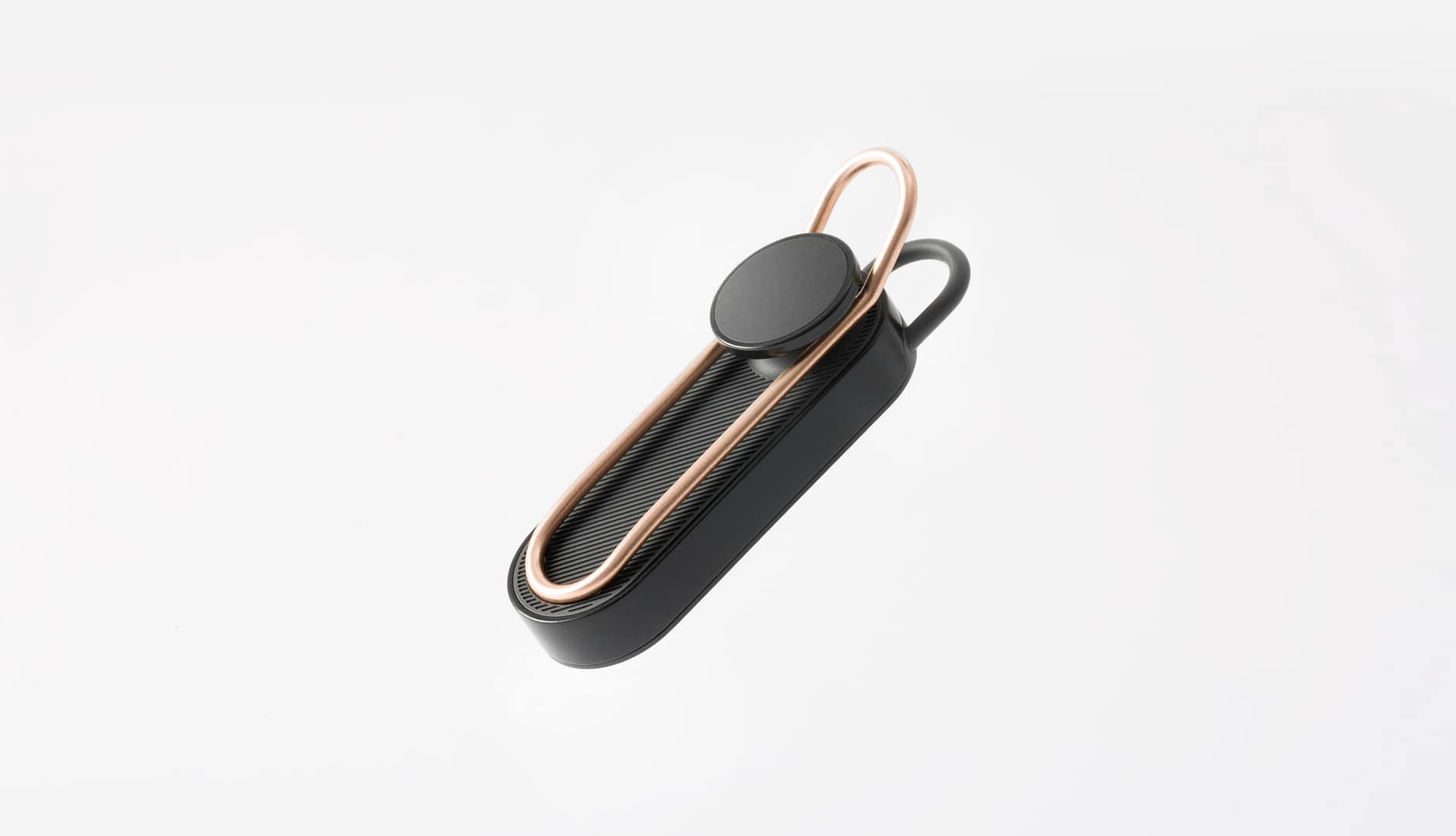
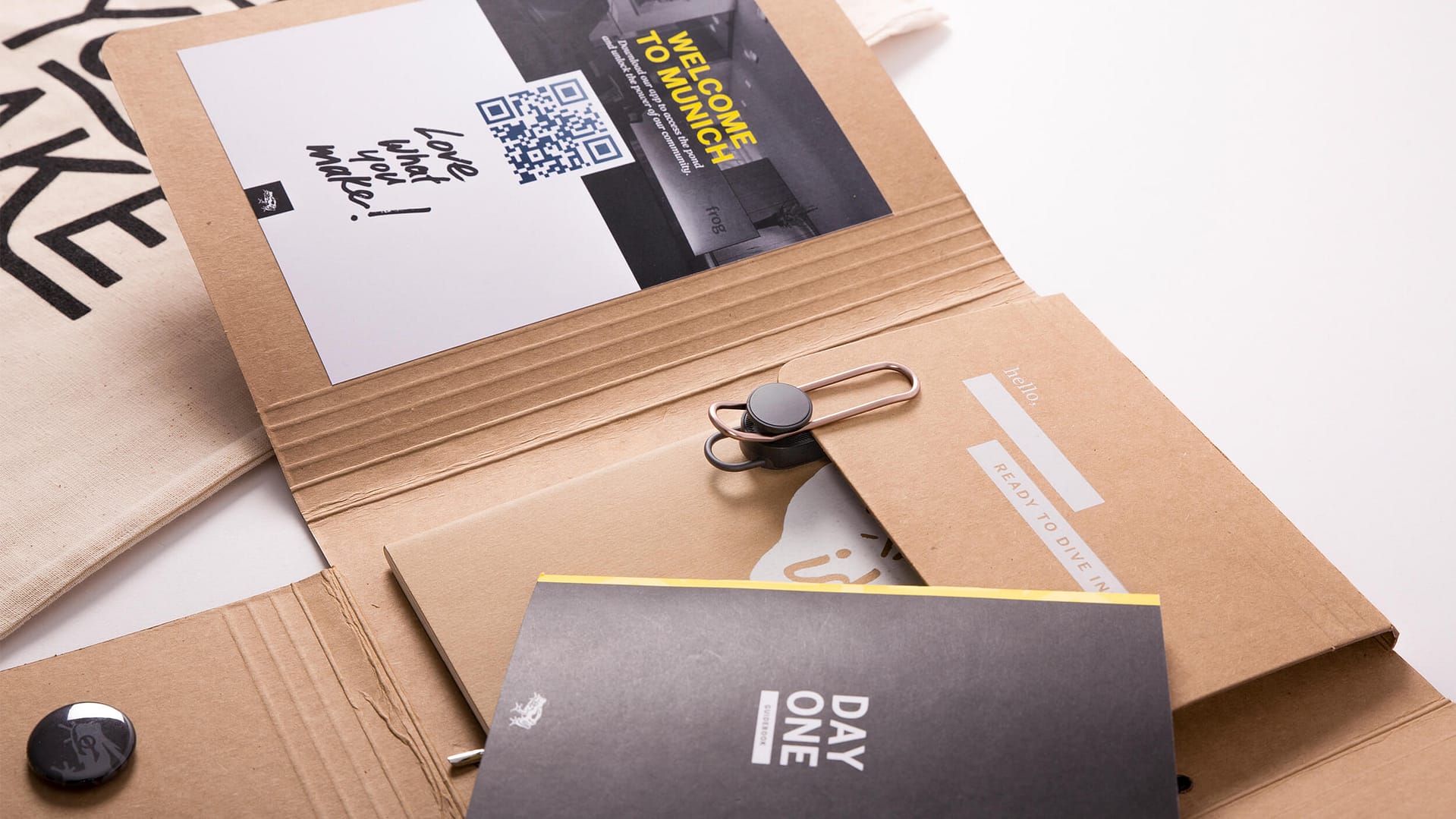
Frog Passport
During my time at Frog, I initiated and led this program as part of the internal “frogLabs” program—an initiative encouraging passion projects and cross-disciplinary collaboration.
The idea was sparked by gaps I noticed in our onboarding process and internal knowledge-sharing tools. I proposed a concept that would merge our physical and digital capabilities to create a fictional, disclosure-free case study that could better showcase our strategic offer to potential clients.
I led the project both creatively and operationally—exploring future scenarios, shaping the narrative, and crafting the final output alongside a talented team across industrial design, strategy, visual and interaction design.
Team
Mariuz Goretzka, Visual Design
Dieter Schwarz, Mechanical Design
Janis, Anton, Ezgi, Peter — Frog Munich.
Industrial Design, Interaction Design
Agency / Germany
2016
Designer&Project Lead
Industrial Design, Interaction Design
Agency / Germany
2015
Junior designer
The concept phase was inspired by tent designs, exploring how similar “push-pin” mounting systems could offer quick deployment and compact storage.
Through rapid prototyping, we quickly realized the initial frame was too cumbersome to set up, leading us to pivot toward a more intuitive foldable pole system.
My sketch work focused on ideas around net tension, structural stability, transportability, and ease of storage. use.
Client— IKEA
Status— Released
2015
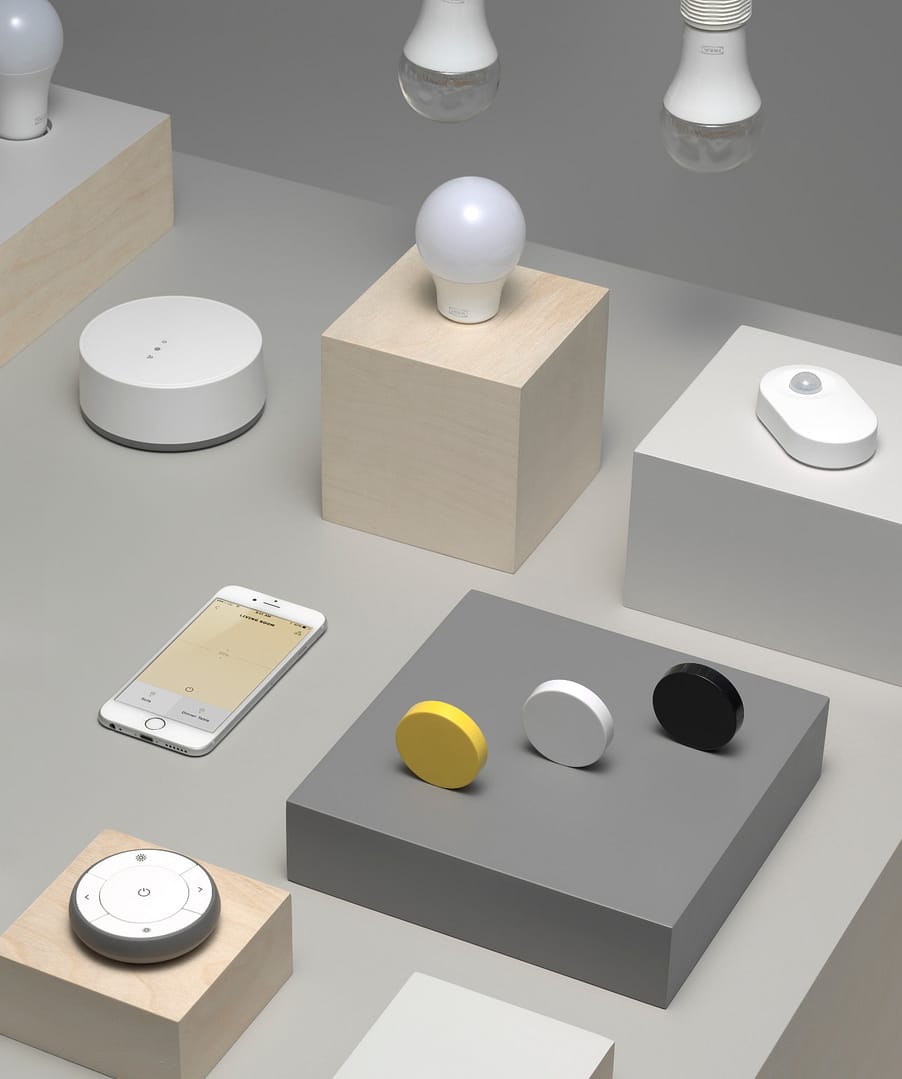
Trådfri
In 2015 Ikea came to frog to enter the market of connected homes. I had the chance to be part of this game changing program. I have been a small part of the process, but did help in the industrial design and testing phase of the program.n.
Team
Mariuz Goretzka, Visual Design
Dieter Schwarz, Mechanical Design
Janis, Anton, Ezgi, Peter — Frog Munich.
Client— Bionym
Status— Released
2013
Junior Designer
Nymi Band _
Identity Worn on the wrist
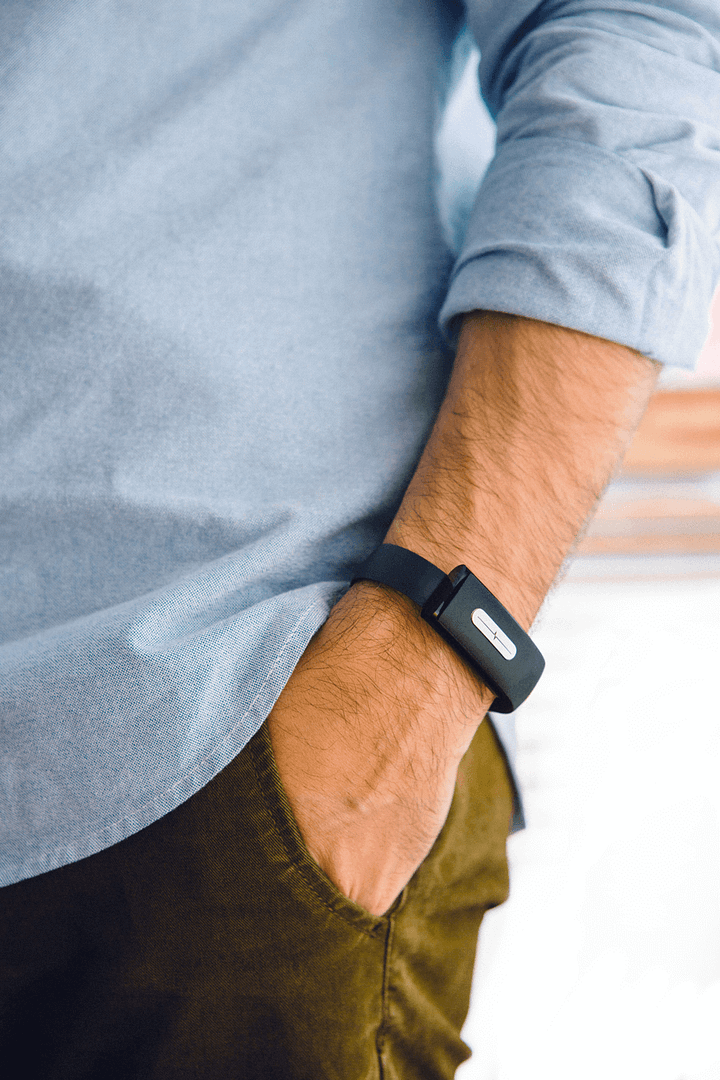
In 2013, Canadian startup Bionym introduced a bold new vision for biometric security. The idea was simple but groundbreaking: your electrocardiogram (ECG) is as unique as a fingerprint—why not use it to authenticate your identity?
The result was the Nymi Band, the world’s first wearable that recognizes your heartbeat to securely unlock devices, doors, or even your car—no passwords or pins required.
Bionym partnered with Carbon Design Group to develop the product vision, UX, and form factor. As a junior designer I joined the Carbon team working closely on concept development, sketching form studies, proposing ergonomic directions, and exploring interaction flows.
Team
Peter Bristol, Creative Director
Joe Sullivan, Senior Industrial Designer
Paul Buckley, Electrical & Software Engineer
— & Carbon Design Seattle.
Industrial Design
Agency / USA
2013
Junior designer
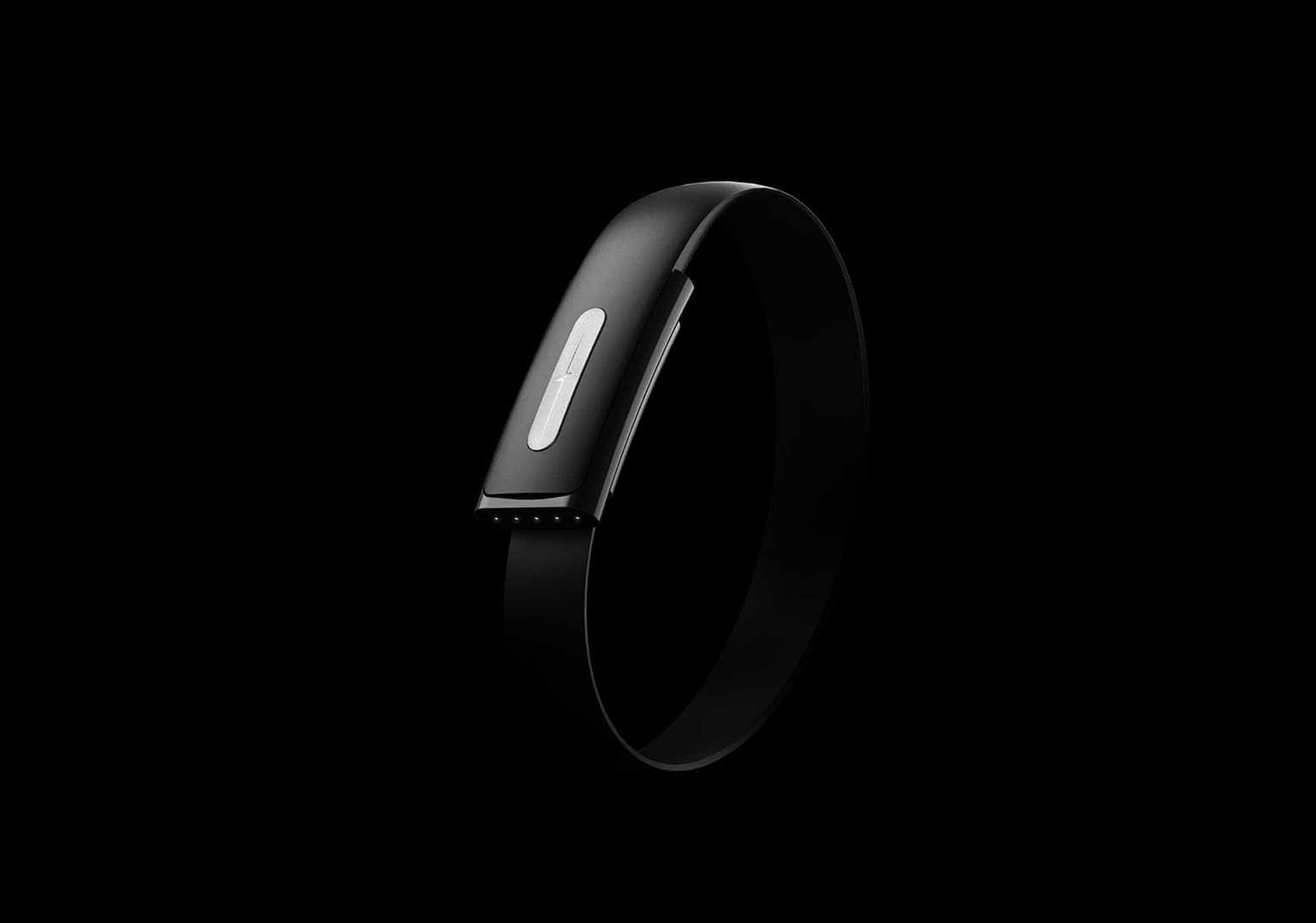
The Nymi Band was the world's first wearable authenticator to verify identity through a person's unique heartbeat. Turning cardiac rhythm into a seamless key for passwordless access to devices, doors, and payments.
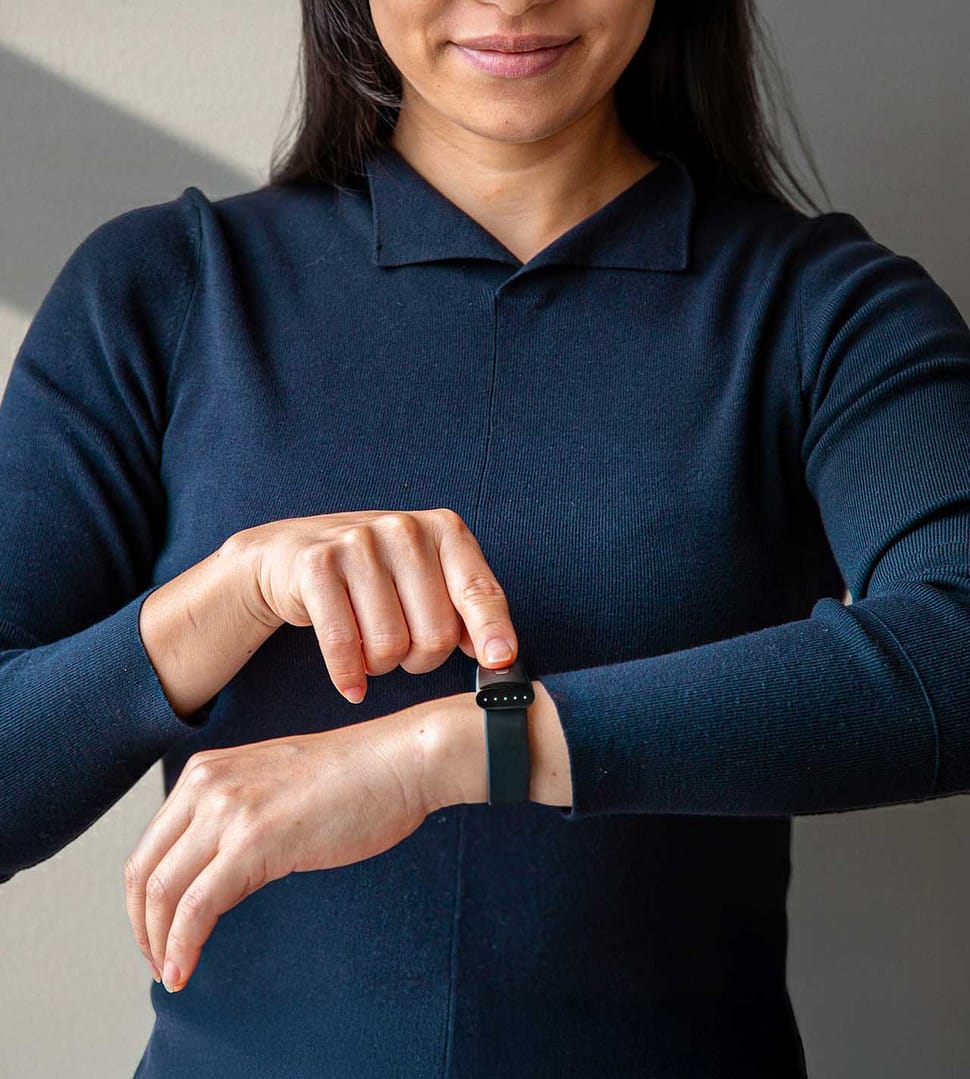
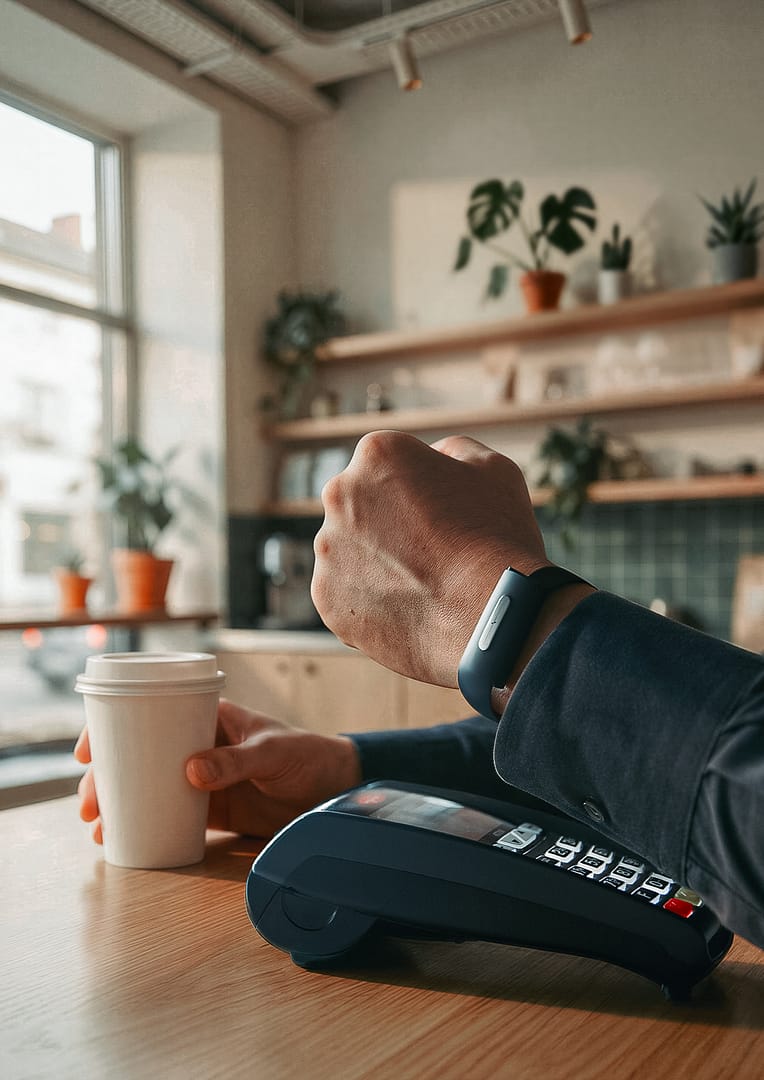
Every person's ECG is unique, and Bionym's HeartID technology was the first to use it for authentication. Unlike fingerprints or facial scans that require repeated checks, your heartbeat is continuous, making identification seamless. Once verified, the band keeps you authenticated as long as it's worn and deactivates the moment it's removed. Even under stress or exercise, the ECG pattern remains stable enough for the system to tolerate variations and adapt over time.
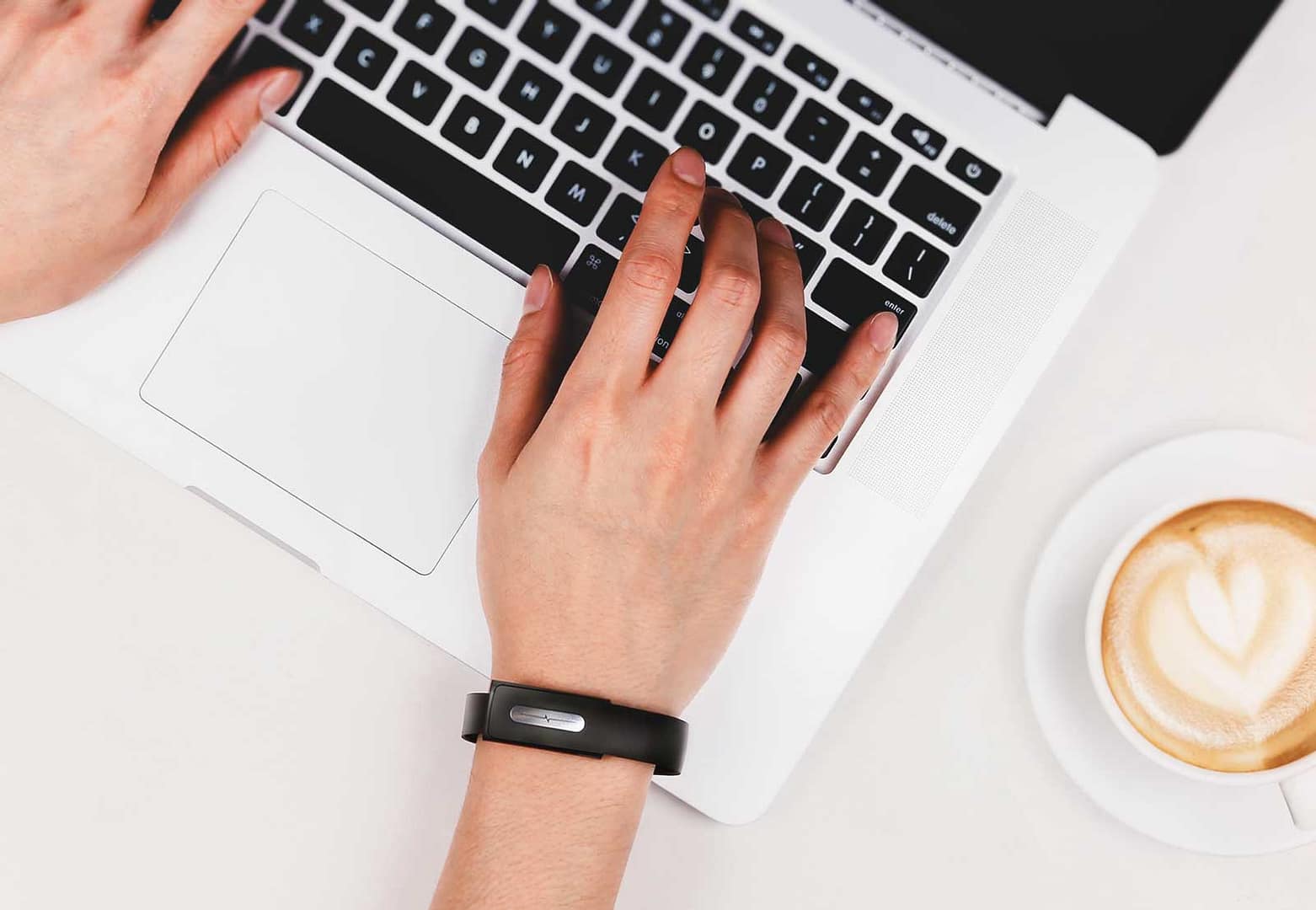
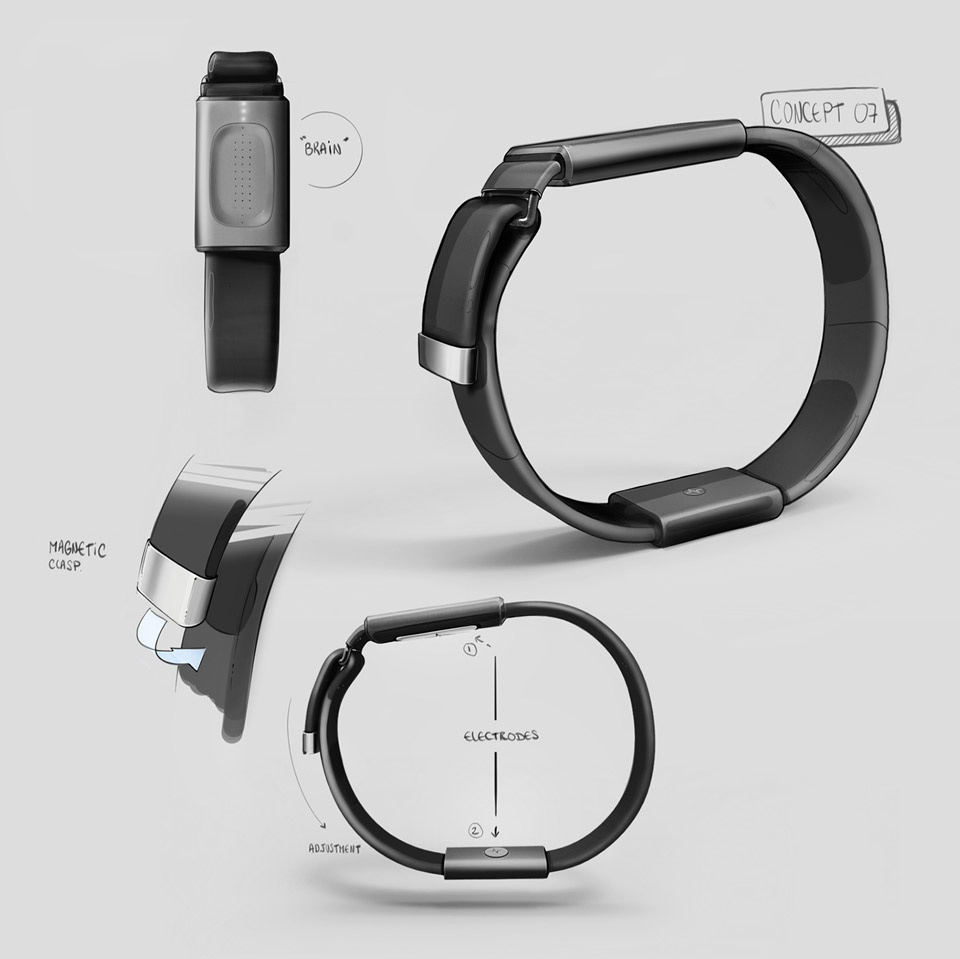
The core module houses two electrodes, one on top and one on the underside against the wrist. Touching the top plate completes a loop circuit through the body, capturing the user's ECG and verifying it against a registered profile, while BLE, NFC, and motion sensors handle secure communication with connected devices and systems.
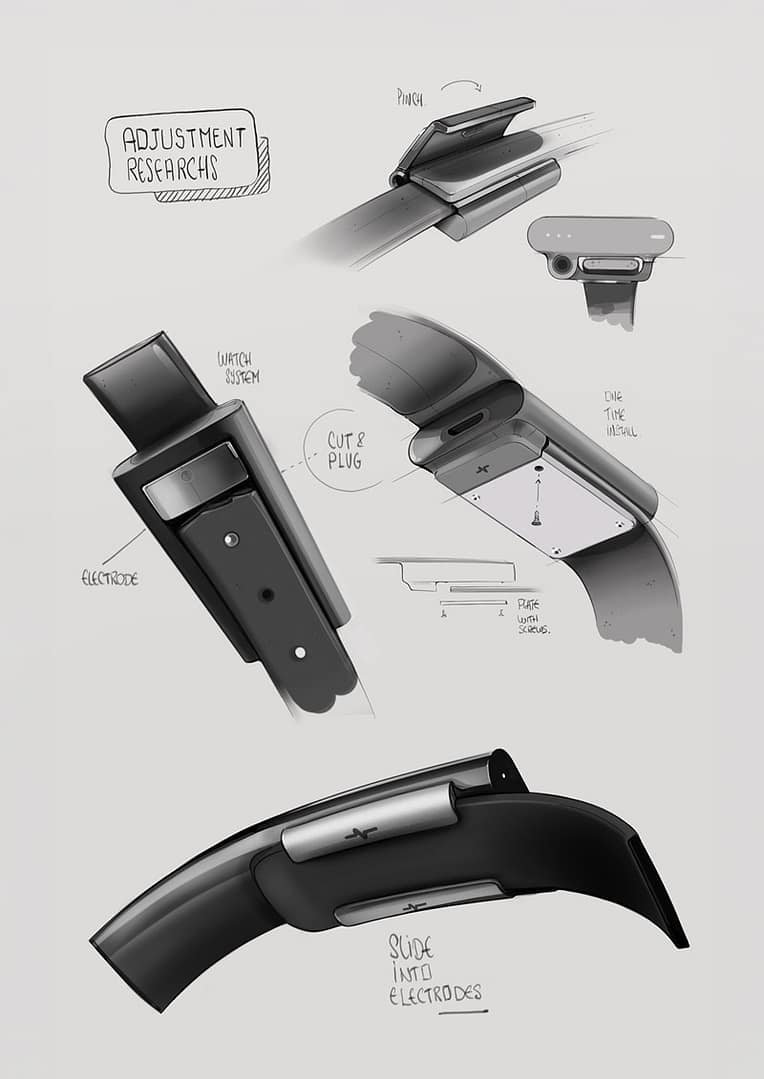
The clasp wasn't just a fastening mechanism — it was part of the circuit itself. The top electrode doubles as a branded touchpoint, and the underside one serves as the adjustment feature, embedding the technology without adding visual noise. Subtle haptics and a minimal LED array handle all user feedback.
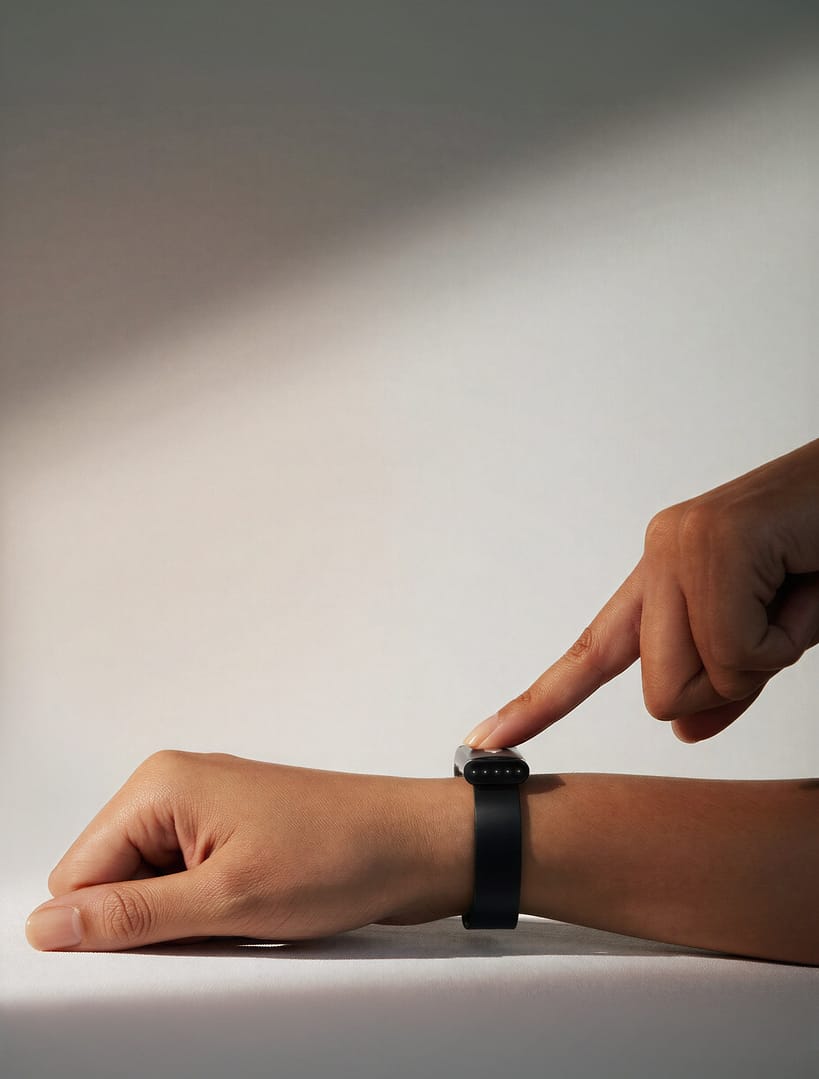
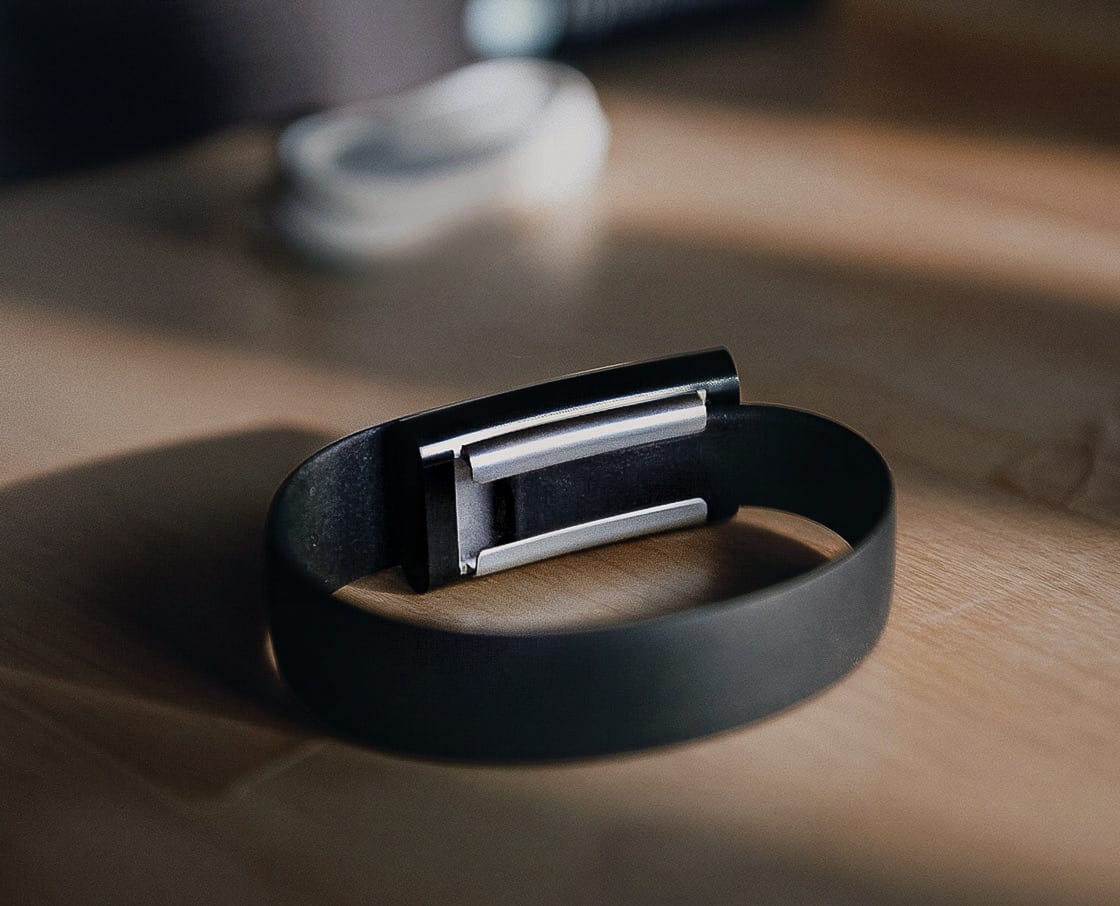
Being a security device first, it was designed to be discreet and avoid calling attention. With no screens or buttons, it blends into daily life, relying only on subtle vibrations and light to communicate with the wearer.

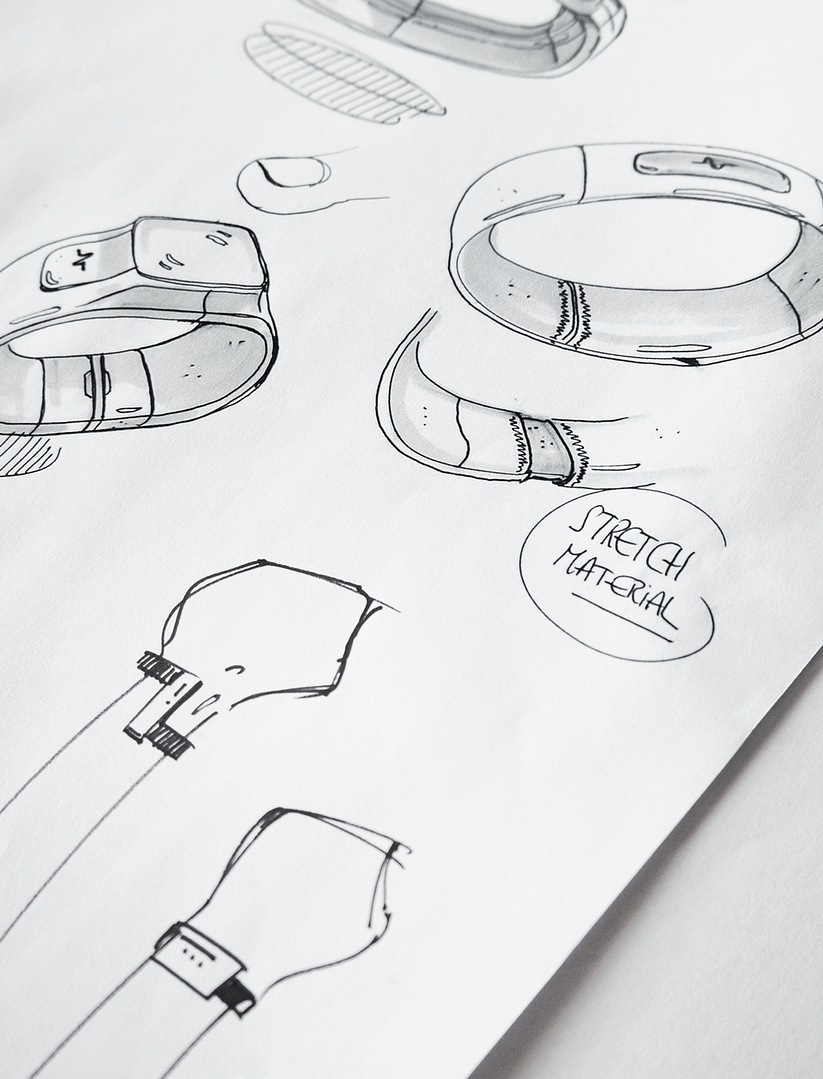
My role was to generate a wide range of concept sketches and support the team in exploring directions for both form and interaction. I was junior at the time, and the senior designers were making the calls, but my job was to bring volume and variety so the team could identify what was worth pursuing.
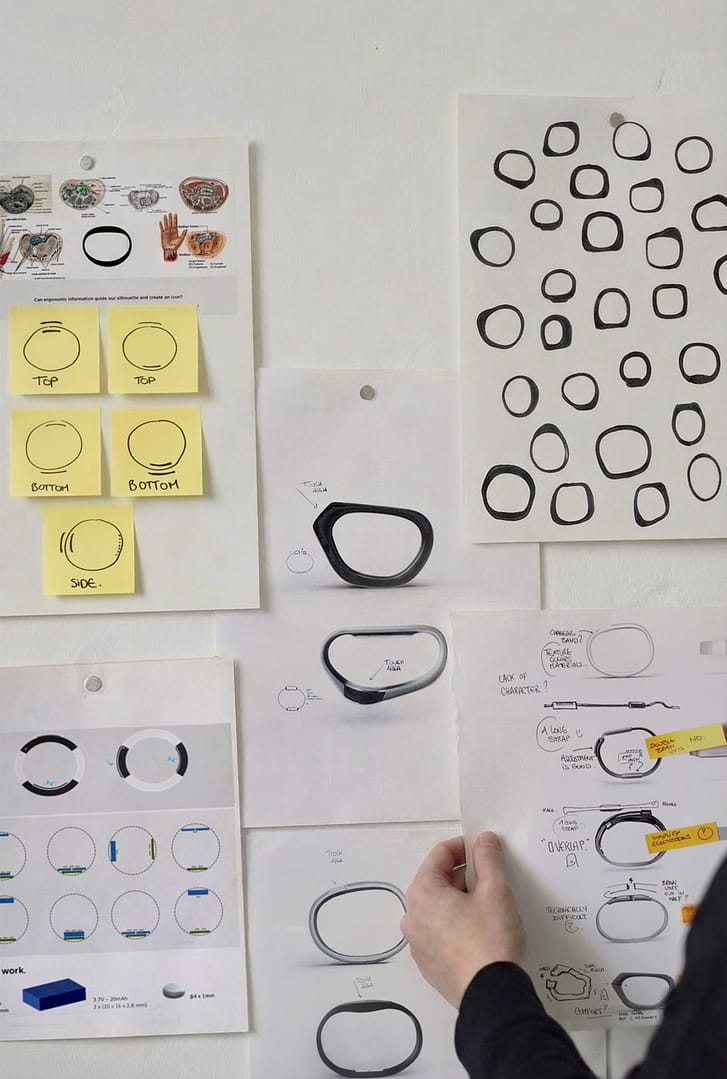
From the start, we explored the band's architecture and its interaction model in parallel. Quick mockups helped us discard awkward gestures early and refine what felt natural. The UX decisions directly shaped the form, and the way the band wraps and overlaps the core came directly out of solving for fit and discretion at the same time.
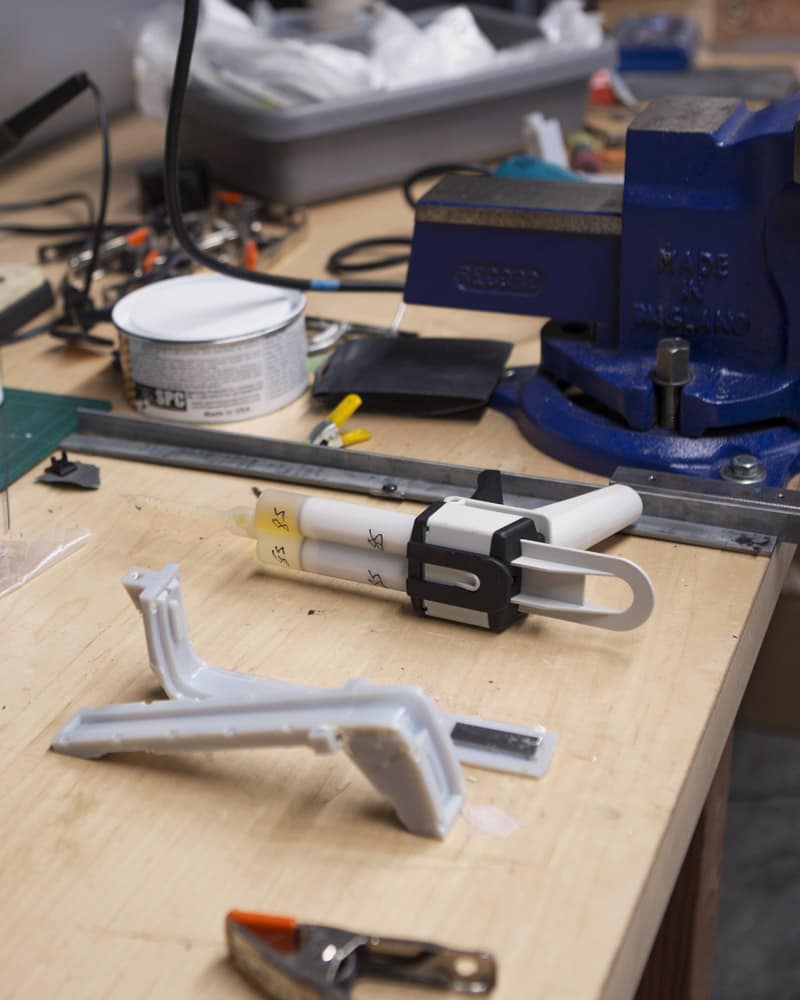
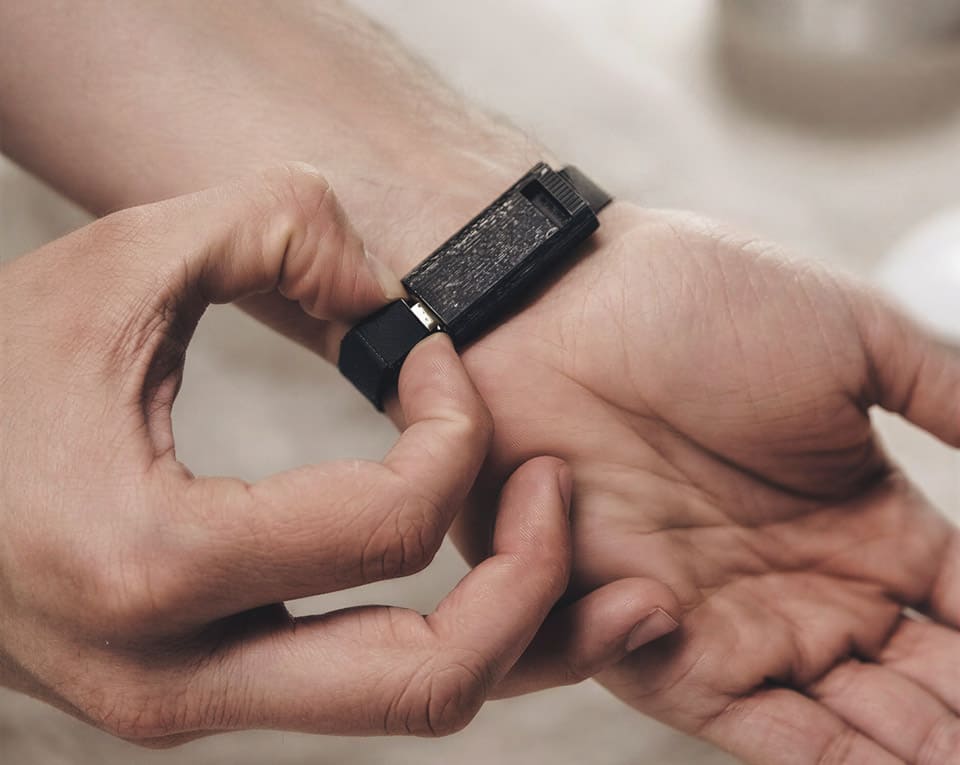
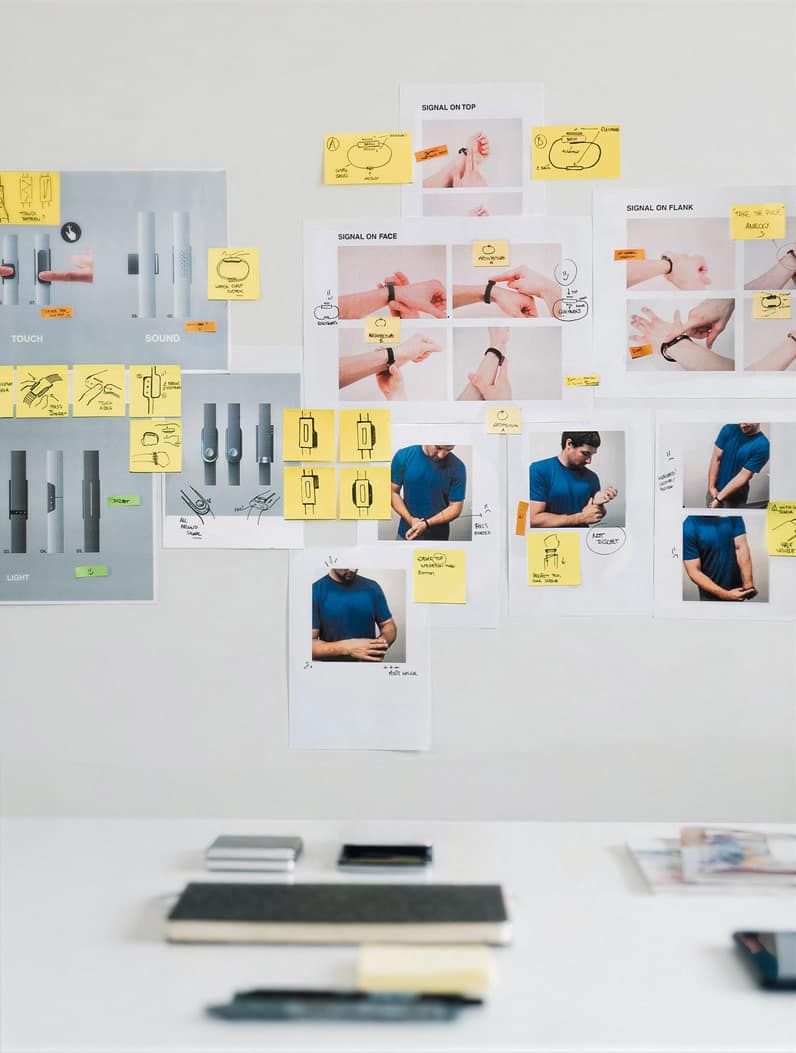
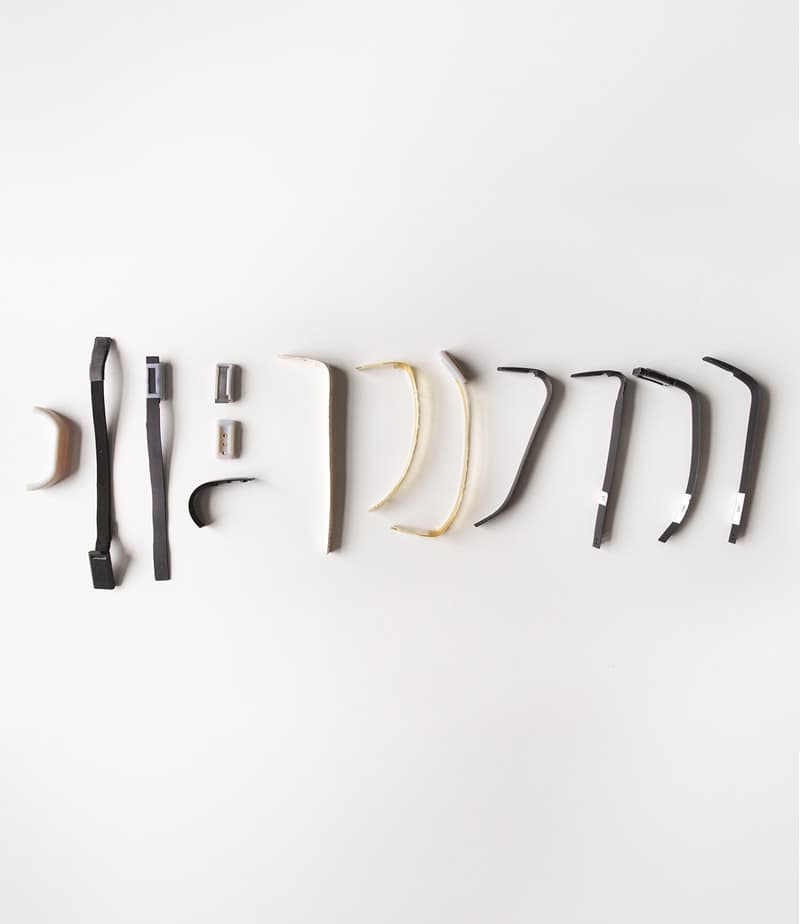
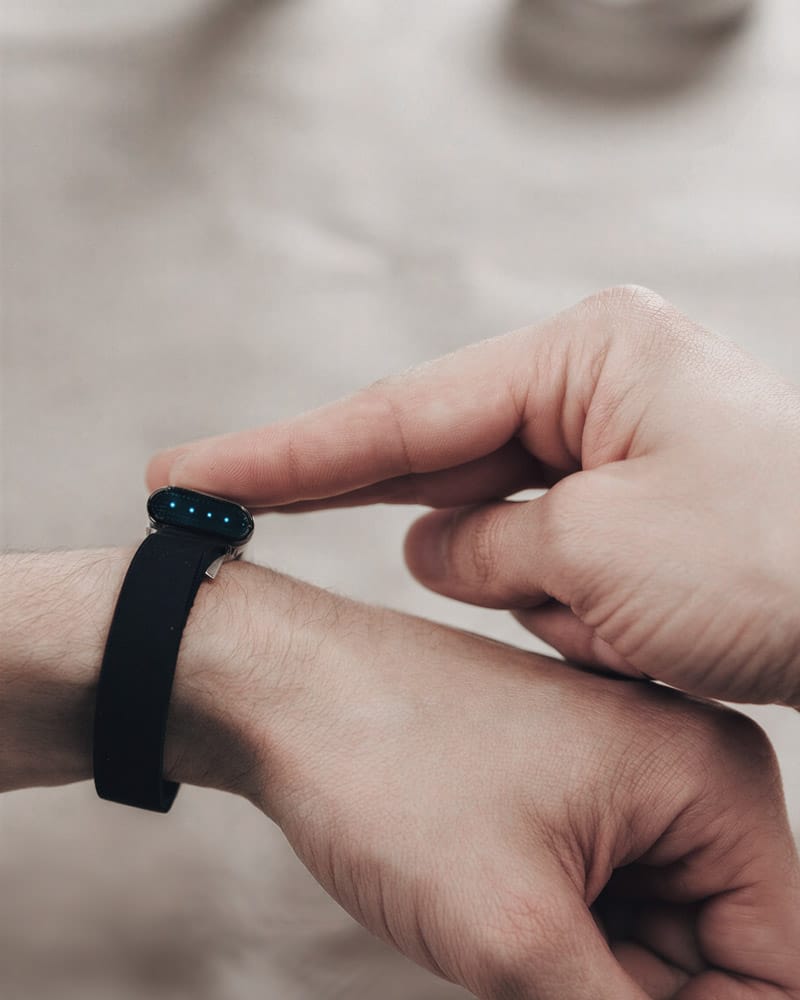
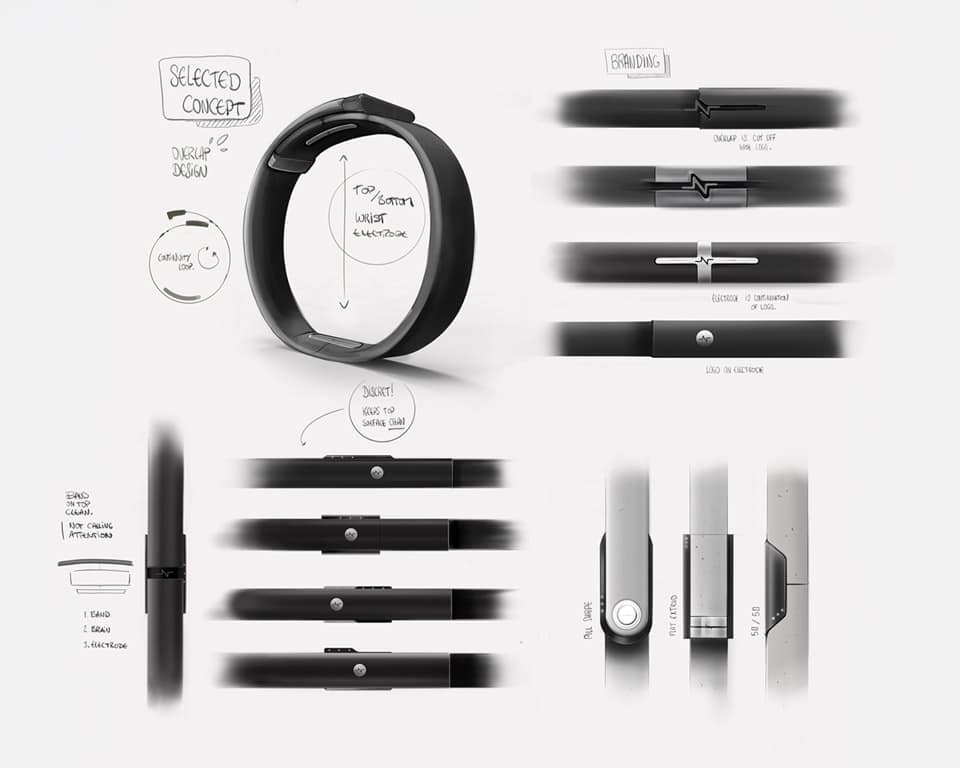
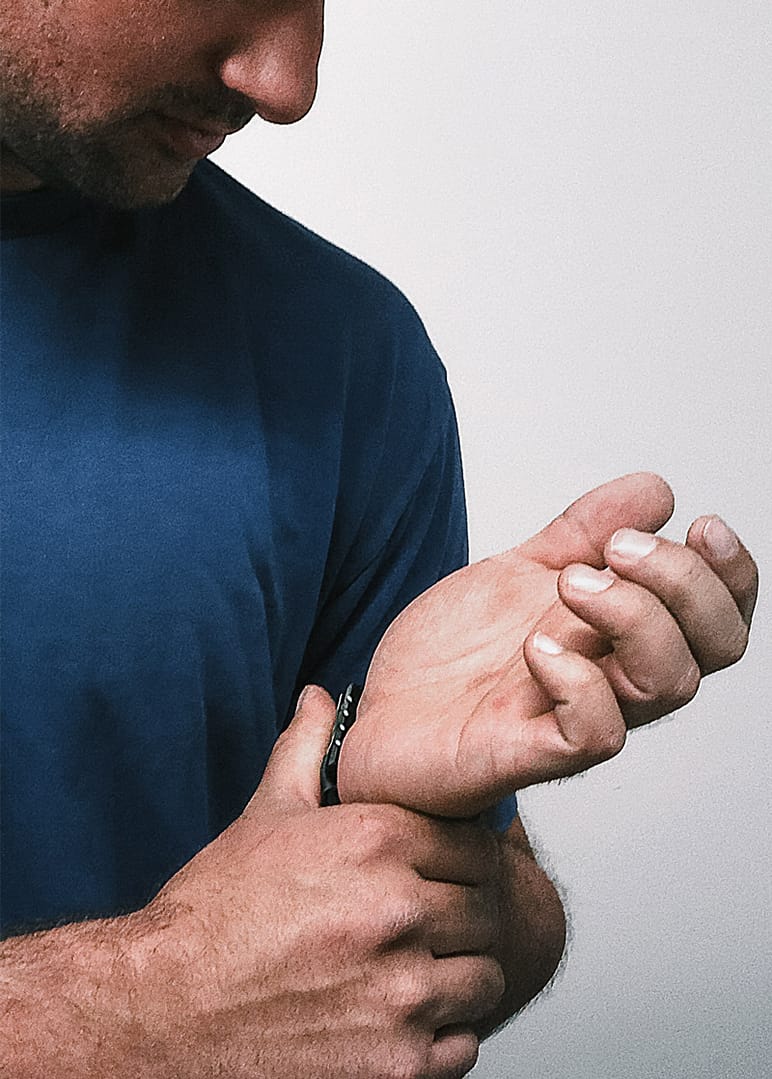
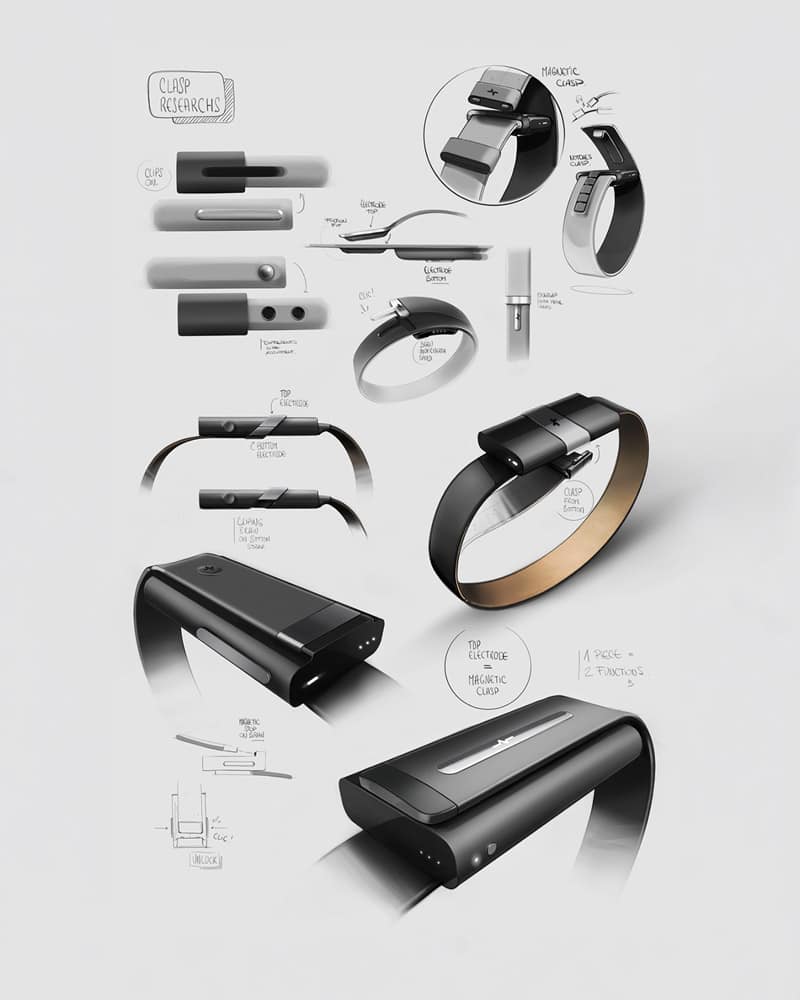
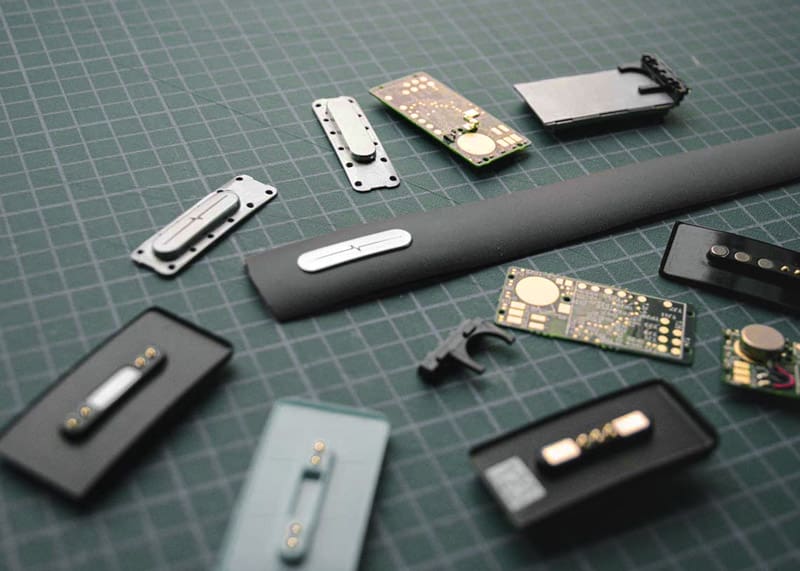
The chosen direction was the clasp. A single element solving two problems at once. The layout itself remained fairly conventional, but the way the band wrapped around and overlapped the core gave it a distinct identity.
Discretion was a central challenge, on two levels. As a security device, the band needed to avoid drawing attention to itself. And as a wearable, facing the wave of fitness trackers becoming fashion accessories at the time, it had to stay away from that mindset entirely.
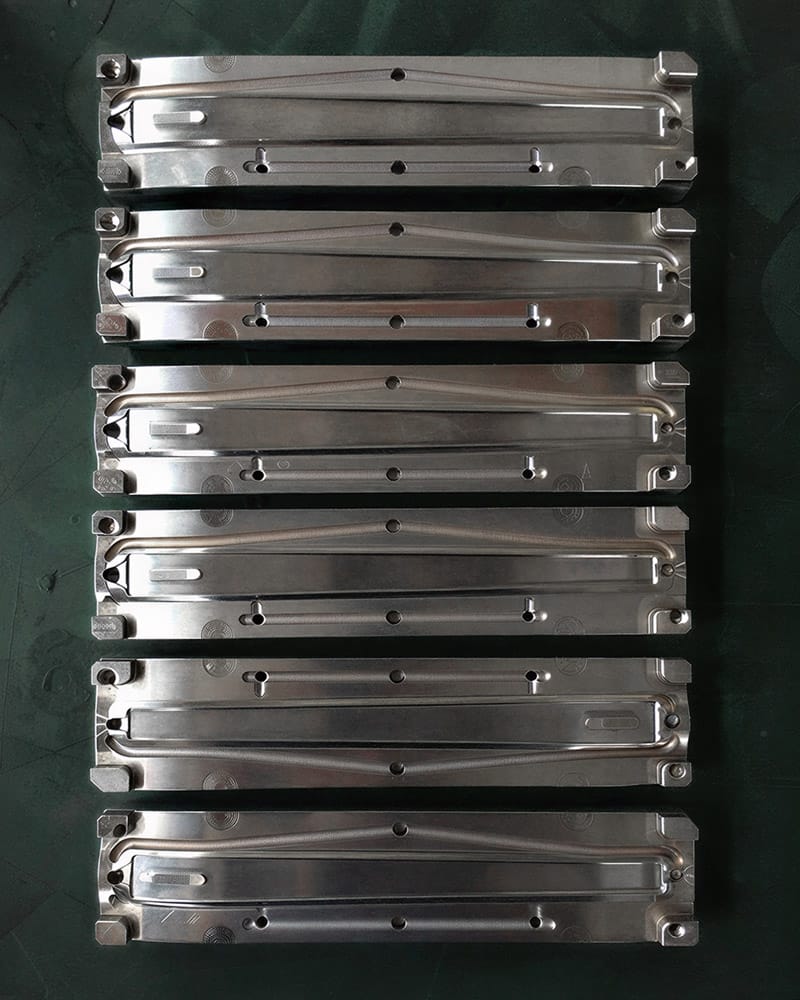
The technology package itself only added to the difficulty, fitting everything into a footprint slim enough to remain discreet and comfortable for all-day wear.

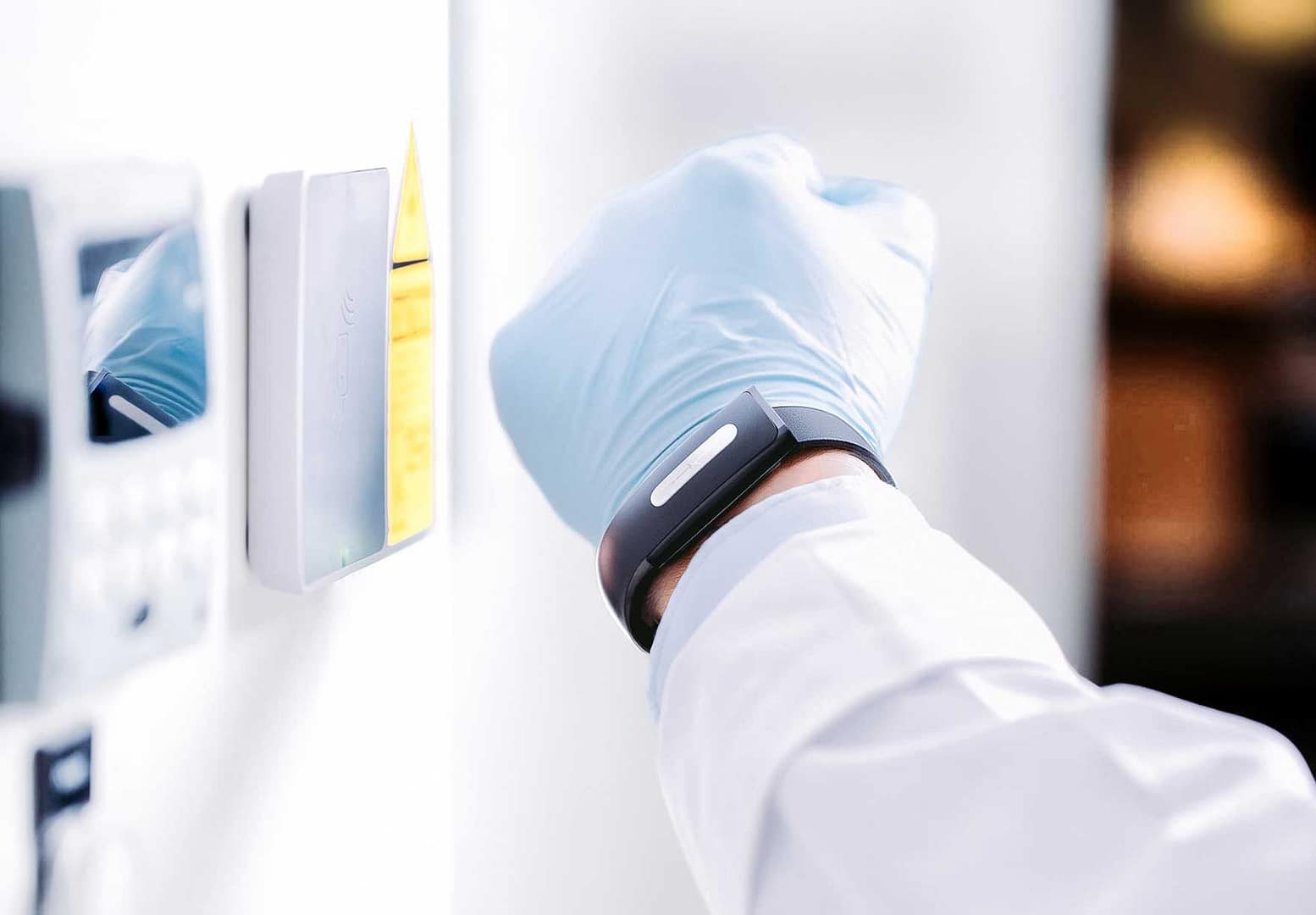
The 2013 announcement generated real momentum as a pioneer in wearable biometrics. Reviews praised its reliability, user-friendly design, and the promise of replacing passwords entirely, and that early credibility enabled meaningful pilots like the Mastercard biometric payment program. Developer kits were released to build an ecosystem and prove out real-world applications. The consumer launch never fully materialized though, as the market had moved toward fitness and lifestyle wearables. The pivot to enterprise turned out to be a natural fit, where secure and seamless authentication has a far more direct and measurable impact. Today Nymi continues to expand across industrial IoT, pharma, and regulated environments where that promise is actually most needed.
Credits—
Sketches and renderings by me,
Product photography by Nymi,
Final design & 3D development by Carbon.
Client— Decathlon
Status— Released
2012
Intern
Decathlon Speednet
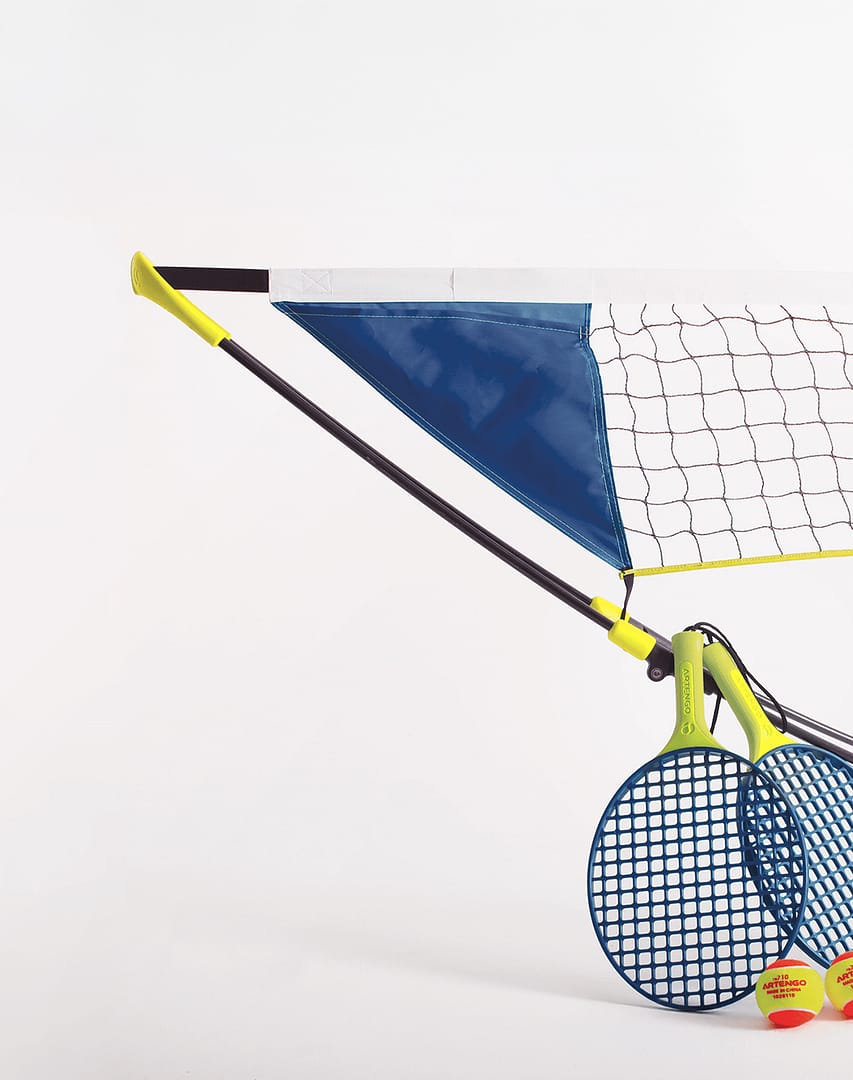
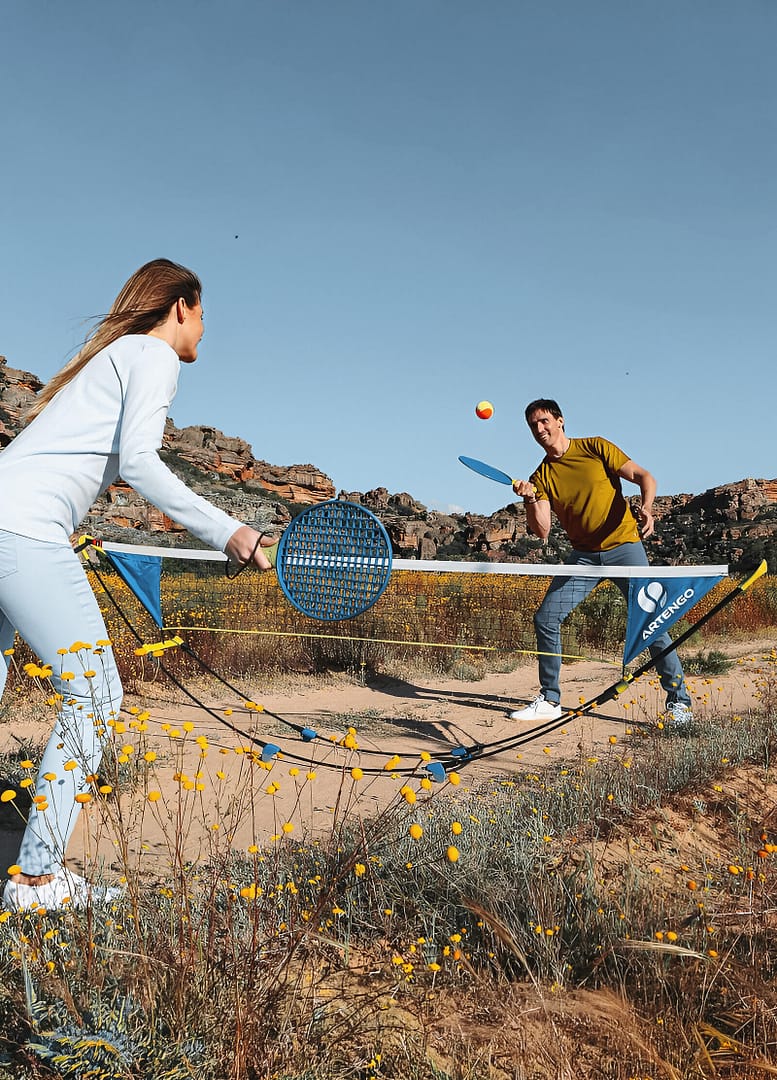
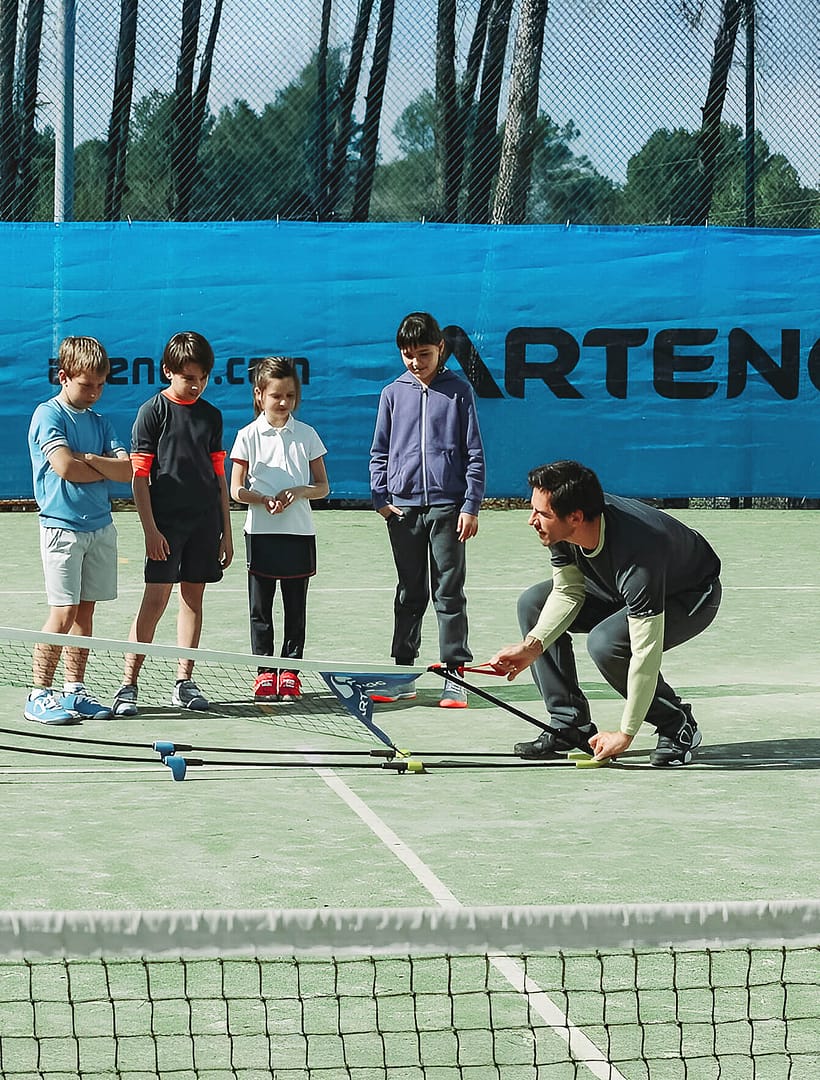
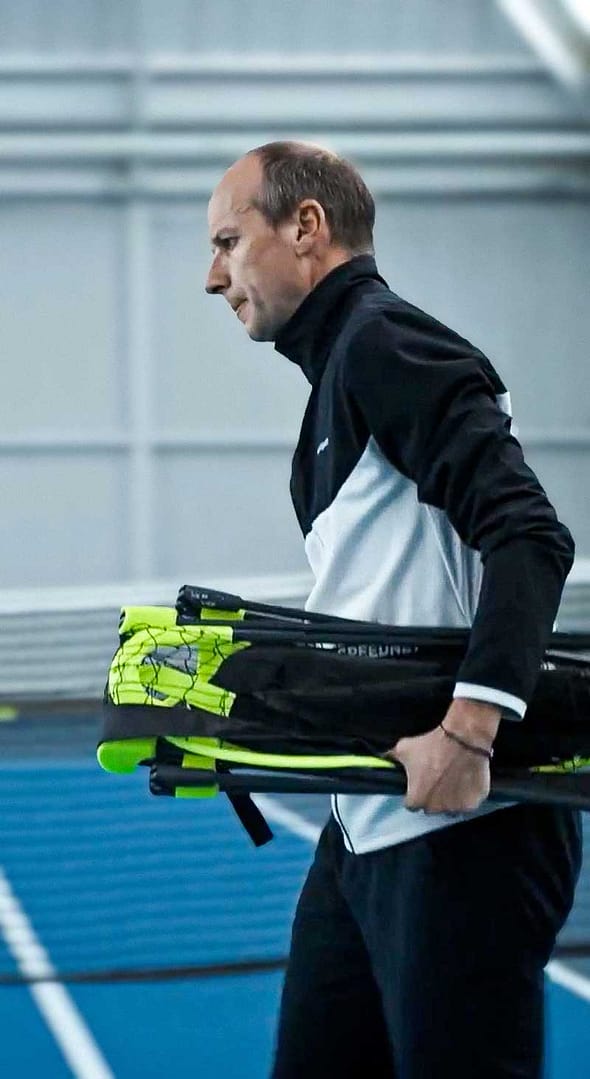
In 2012, Decathlon set out to bring the spirit of its popular "Rollnet" table tennis net to the world of tennis. The promise was to offer a foldable net that could be set up in under 20 seconds, making tennis accessible anywhere.
As an intern in the racket sports brand, I joined the early concept and validation phases of the project. Working with my mentor, I contributed fresh ideas through ideation sketching, creative workshops, and hands-on mockups. While I left before the final design phase, it has been rewarding to have worked on a product that remains on the market over a decade later.
Team
Johan Guerizec, Design Lead
Joel Triboult, Product Engineer
Antoine Vanhabost, Design Engineer
Decathlon in house team (MKNIX), Mechanical Development
Decathlon - Artengo
In house / France
2012
Intern
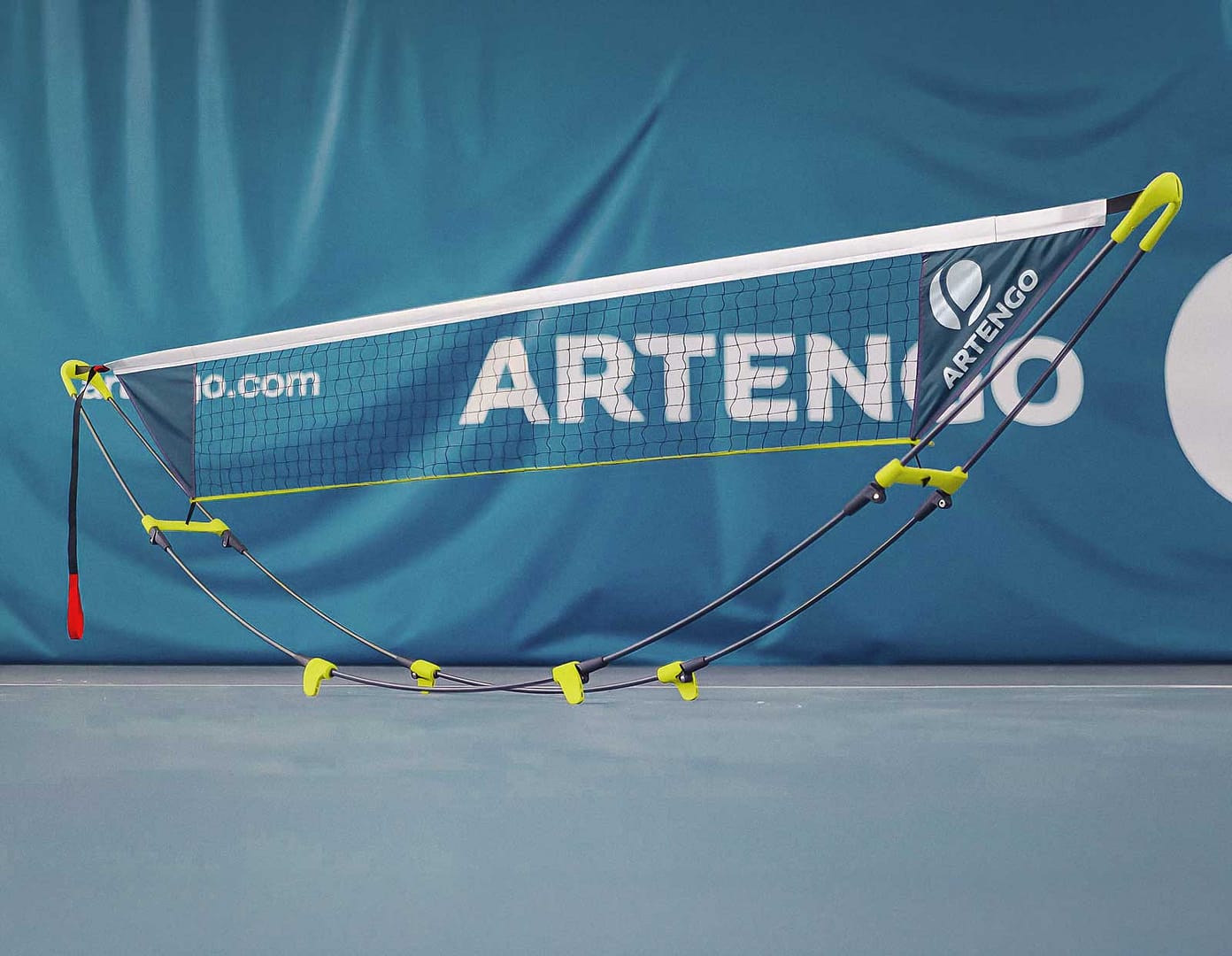
Designed for families and tennis instructors, the foldable frame sets up in seconds—no extra parts, no assembly. The adjustable strap lets you fine-tune the height for kids or adults, wherever you play.
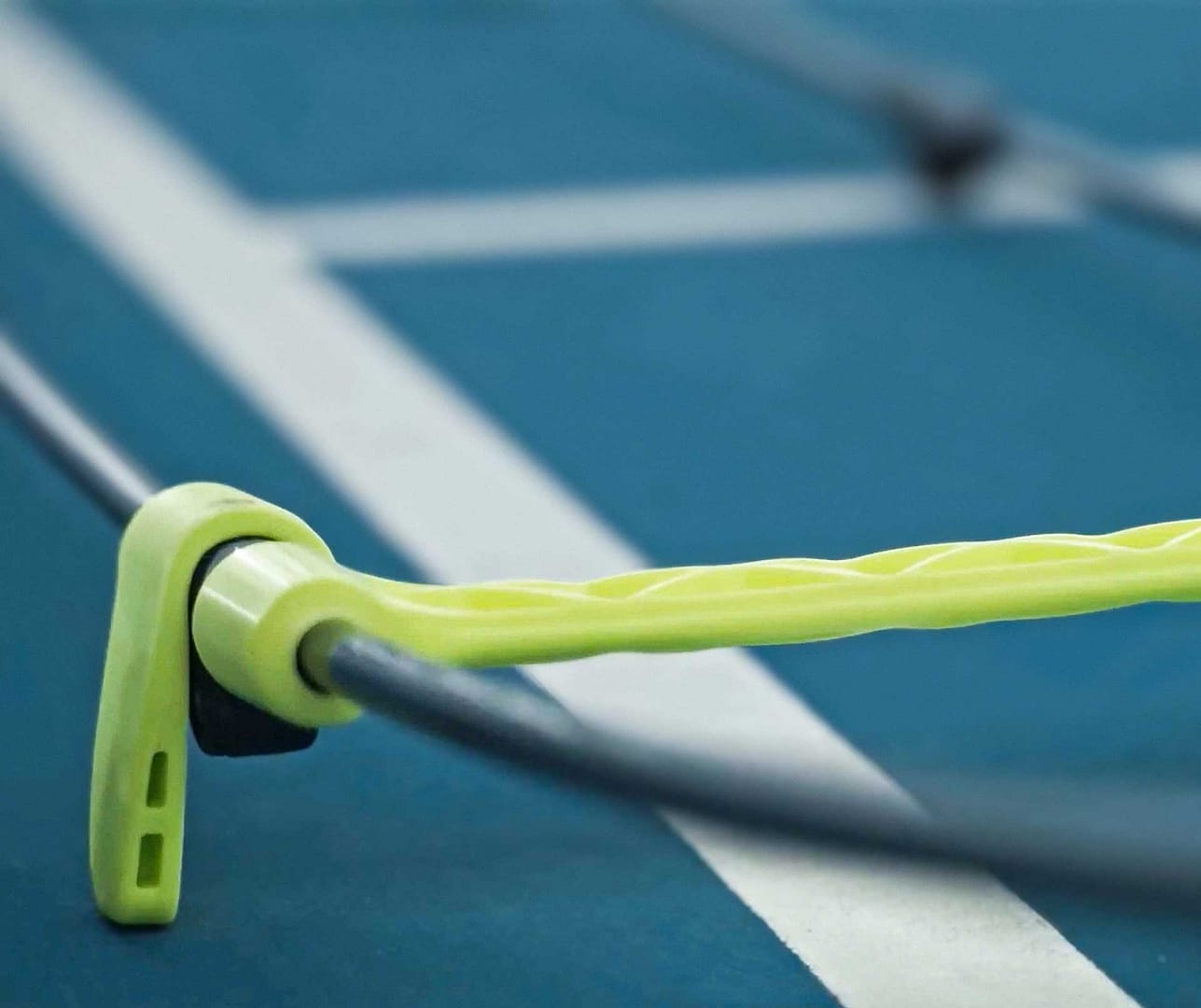
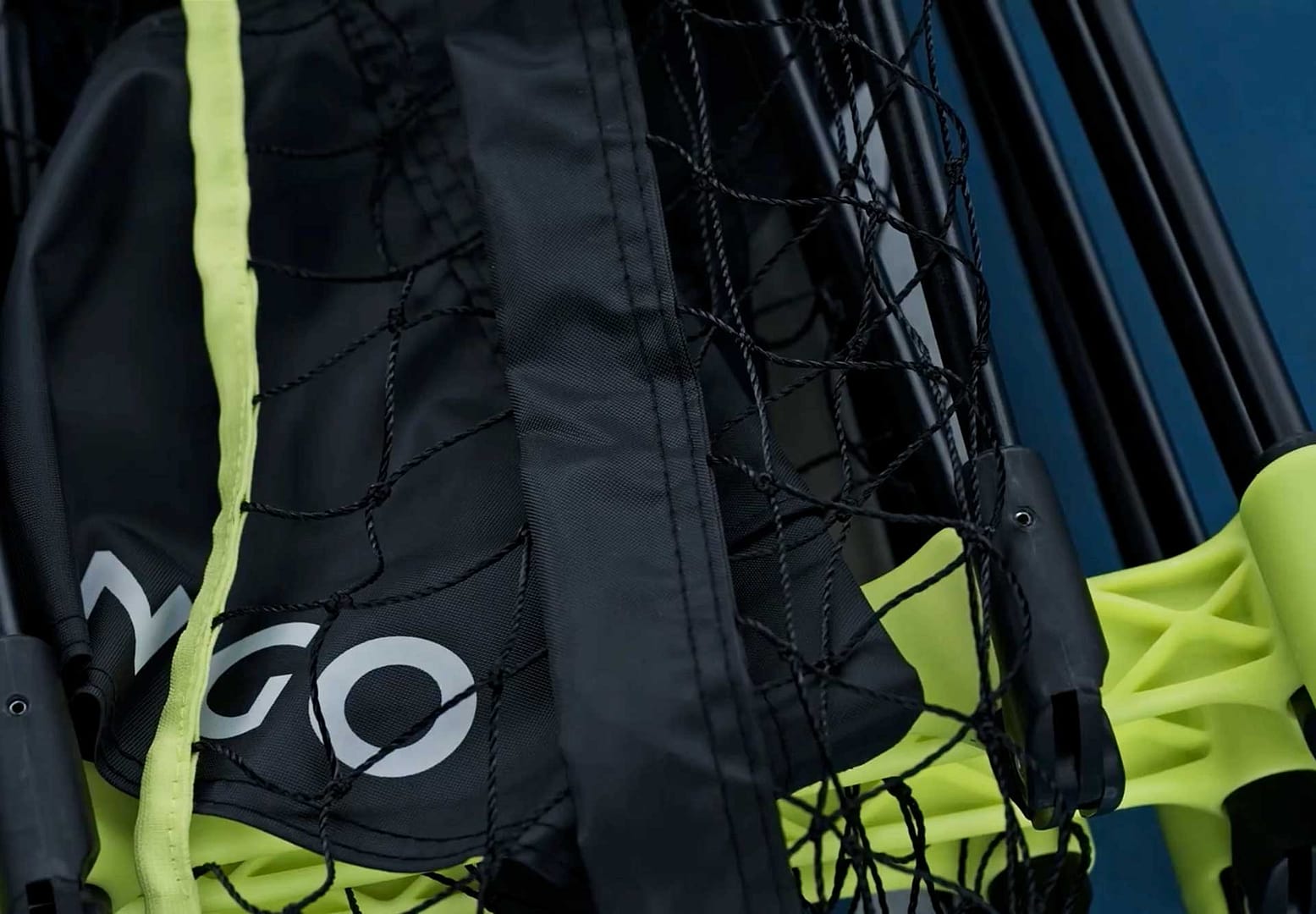
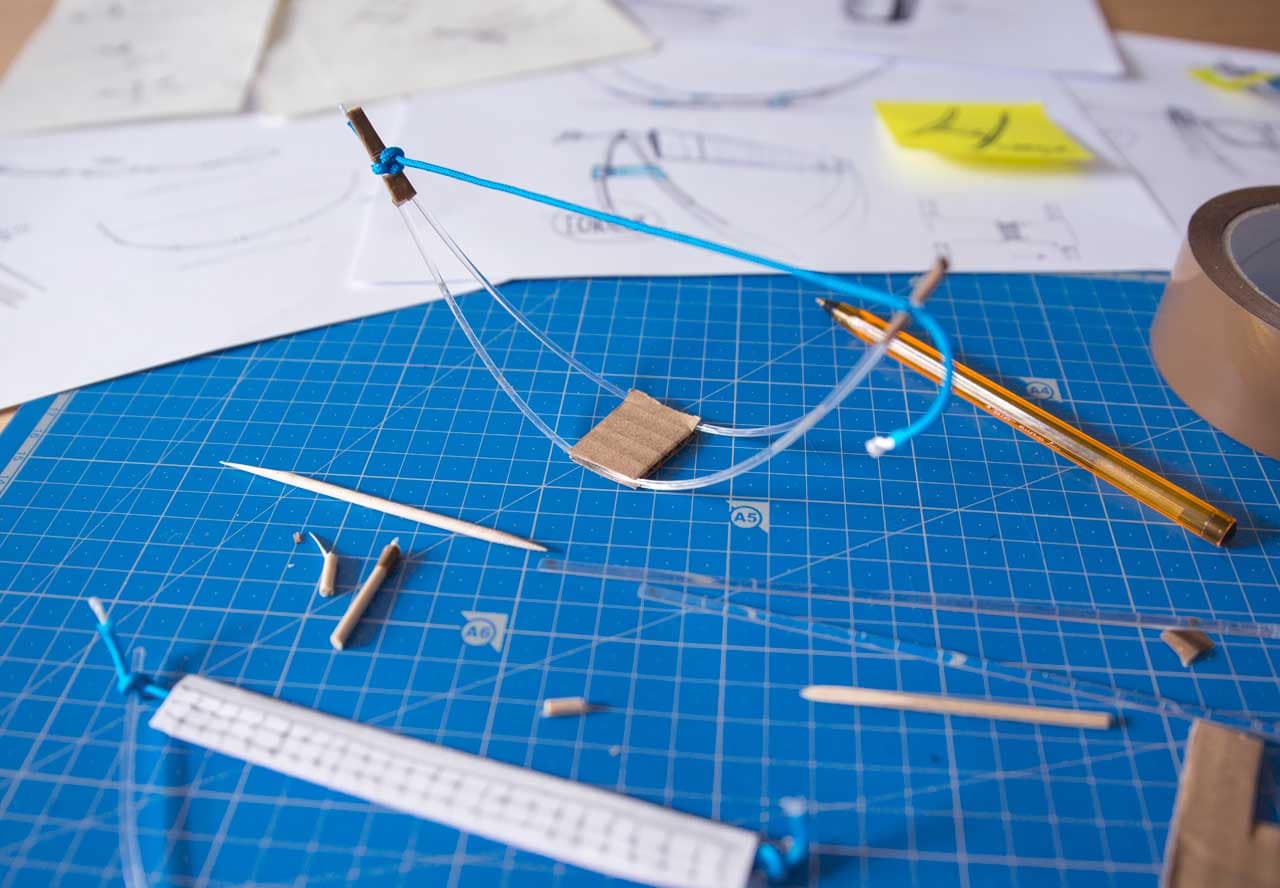
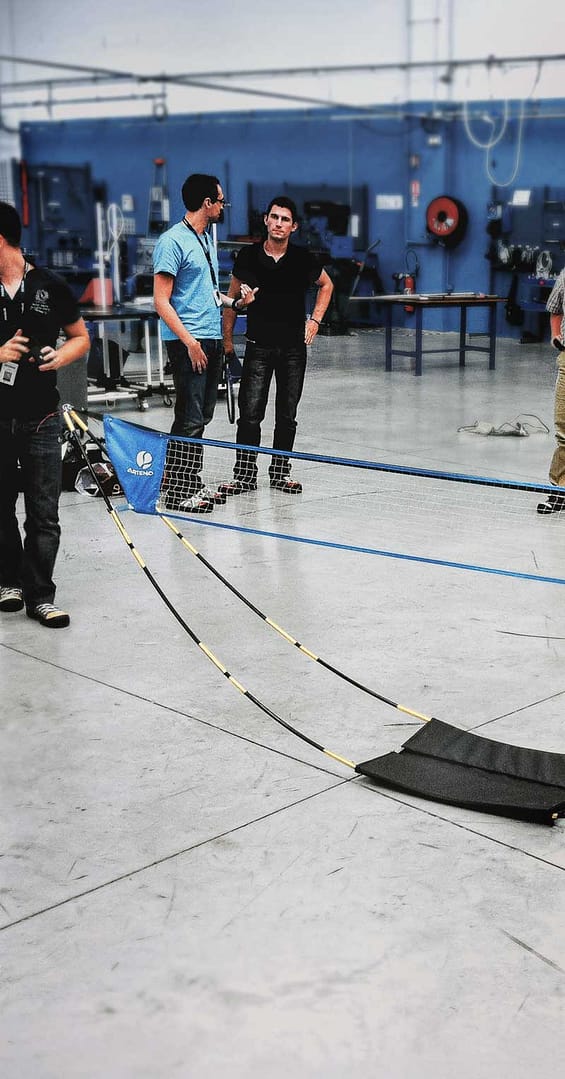
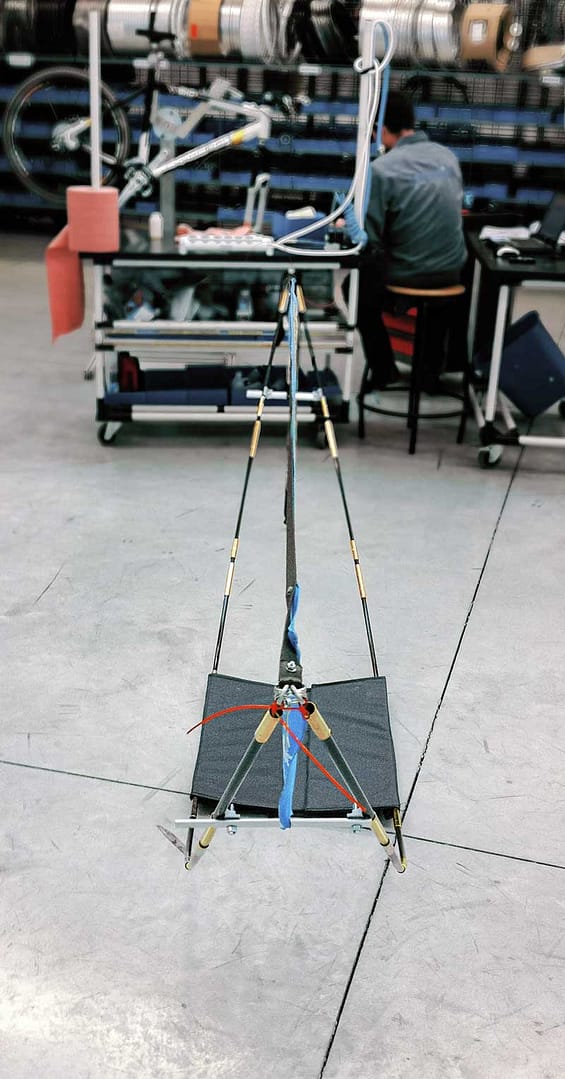
The concept phase was inspired by tent designs, exploring how similar “push-pin” mounting systems could offer quick deployment and compact storage.
Through rapid prototyping, we quickly realized the initial frame was too cumbersome to set up, leading us to pivot toward a more intuitive foldable system.


Creative Process — I contributed to the early creative workshops, supporting the team with ideas & concept that helped define the final product direction.
My work focused on exploring solutions such as net tension, structural stability, transportability, and ease of use through rapid sketching and mockups.
While I was not involved in the final design & detailing, my early sketch work was used to shape the outdoor racket included in the kit, designed for fun, low-maintenance play.
Credits—
Product Photography & Video by Decathlon
studioguide © 2025